
Room Five: The Living Zone — Creating a Living Room in a Studio Flat
In a studio flat, the living room doesn’t exist permanently. It appears each morning.
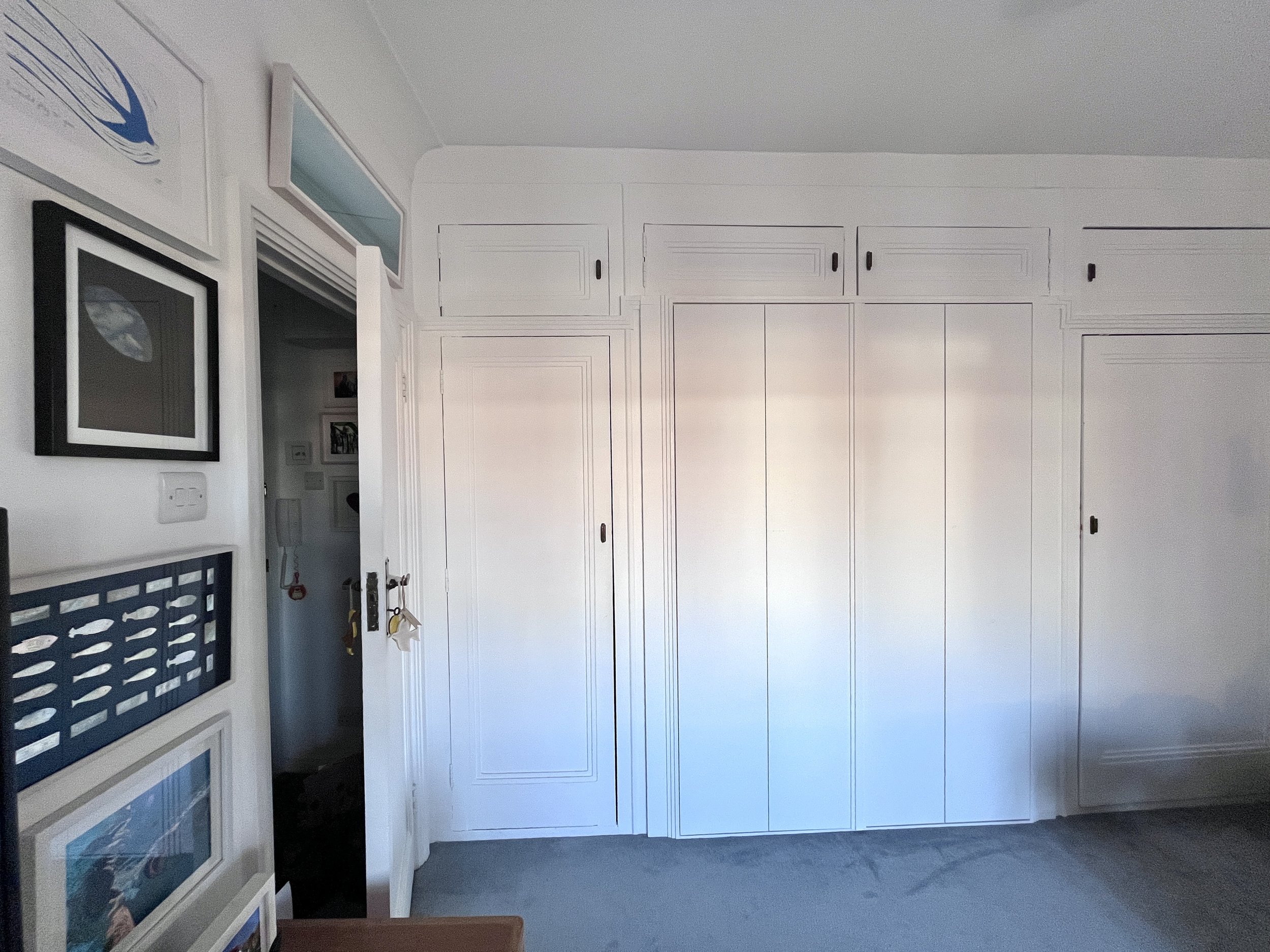
As soon as I wake up, I fold the Murphy bed away and close the cupboard doors built to match the original Art Deco joinery. Instantly, the room shifts. Where I slept becomes somewhere to live, work, and create.
Before installing the Murphy bed, I lived here for a year with a standard bed. It made the space feel heavy, as though I was always in a bedroom. There was no separation between resting and living.
Now, putting the bed away each morning feels like entering a new room.
That simple action has transformed how the flat works — and how it feels.
A space that evolves throughout the day
This one room supports many versions of daily life.
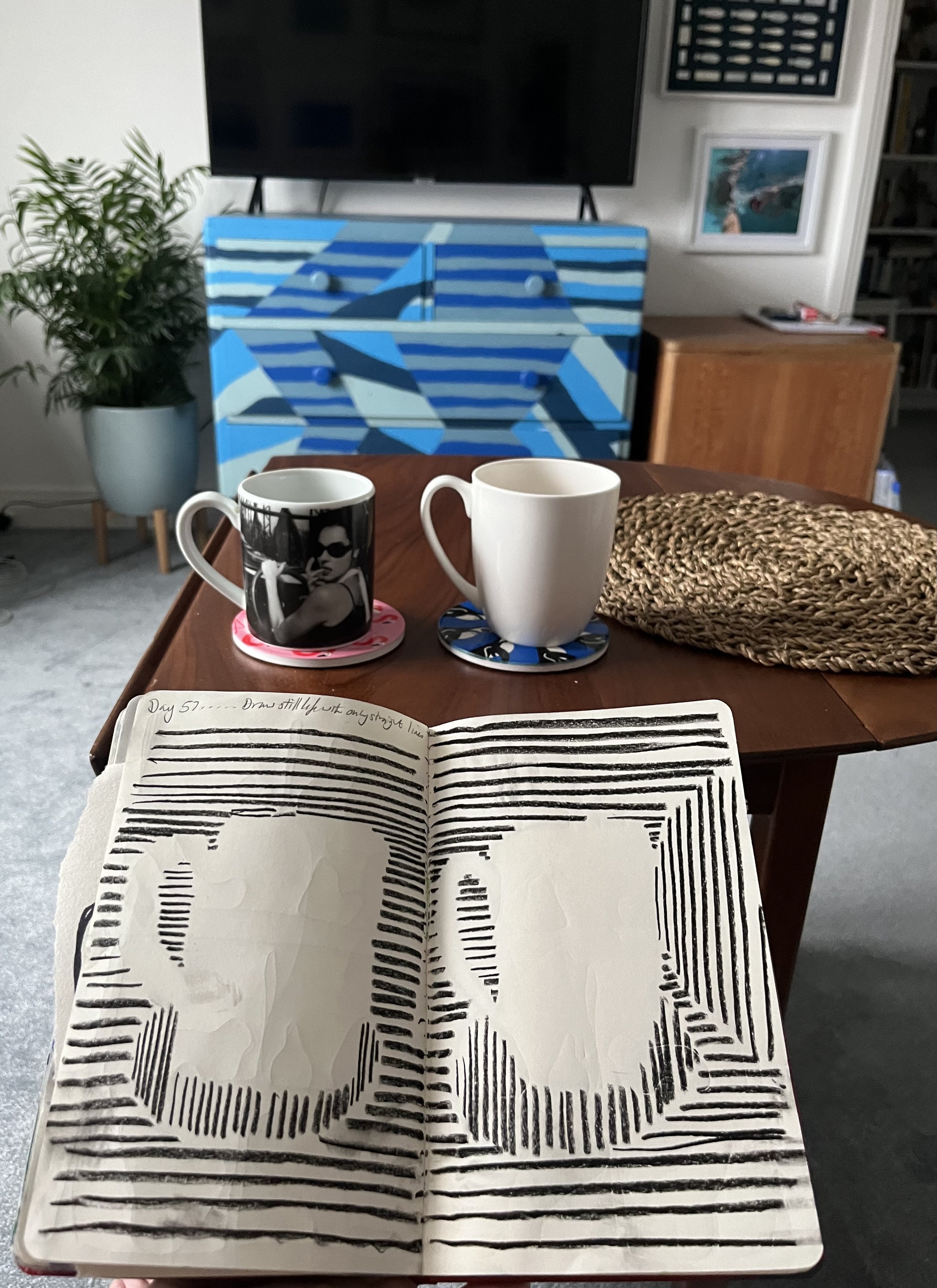
In the morning, I sit on the sofa with tea and sketch.
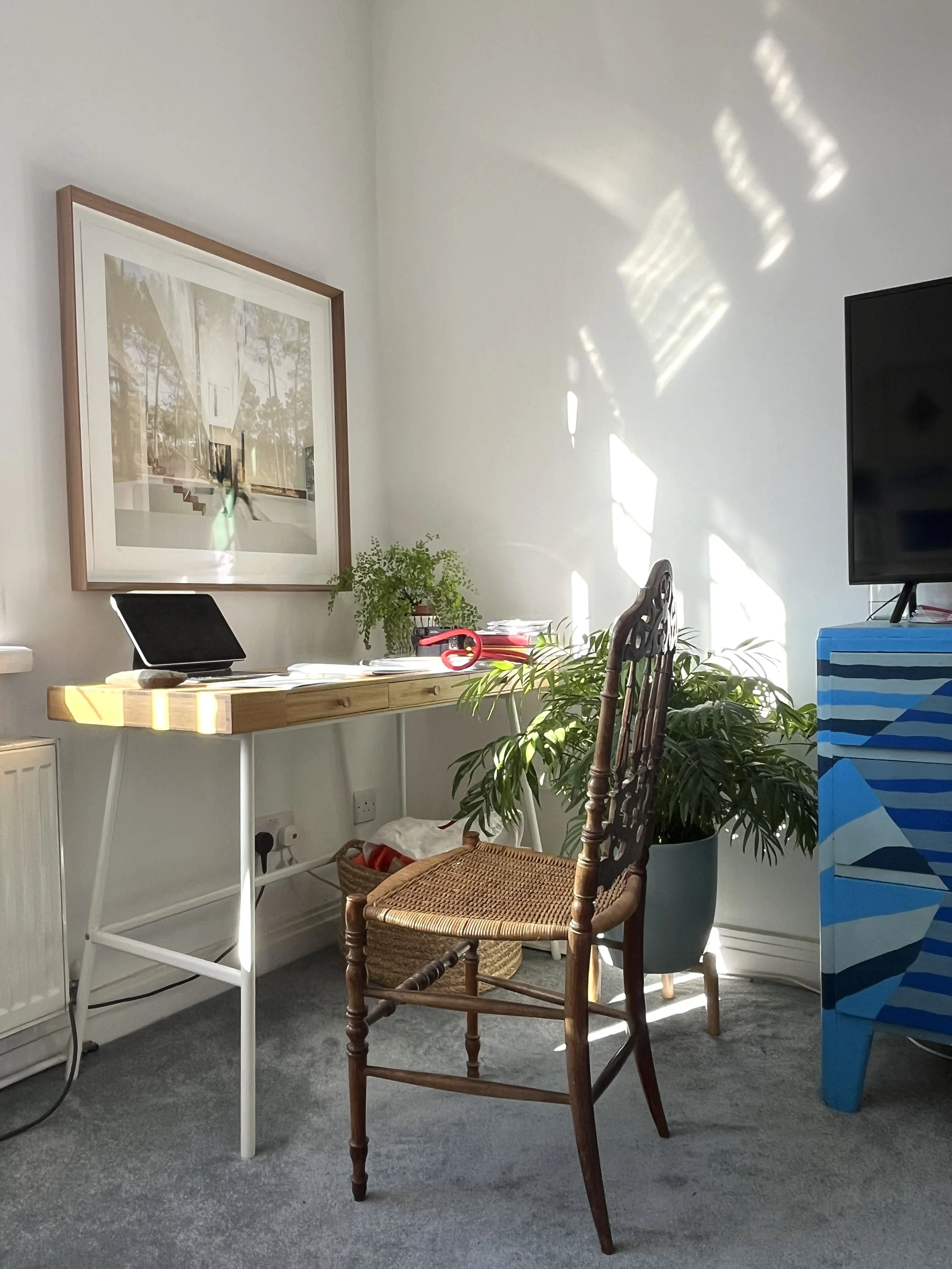
By day, it becomes my office, working at the desk by the window.
In the evening, with lamps on and softer light, it becomes somewhere to rest — watching films, sewing, drawing, or simply sitting quietly.
Having the ability to put work away is essential. Each evening, I store my laptop and papers inside a wooden box my dad made for my degree show. Closing the lid is a small but important ritual. It allows the room — and my mind — to shift from work to home.
In a studio flat, these transitions matter.
Furniture that earns its place
Every piece of furniture here has been chosen slowly, often second-hand, and often with more than one purpose.
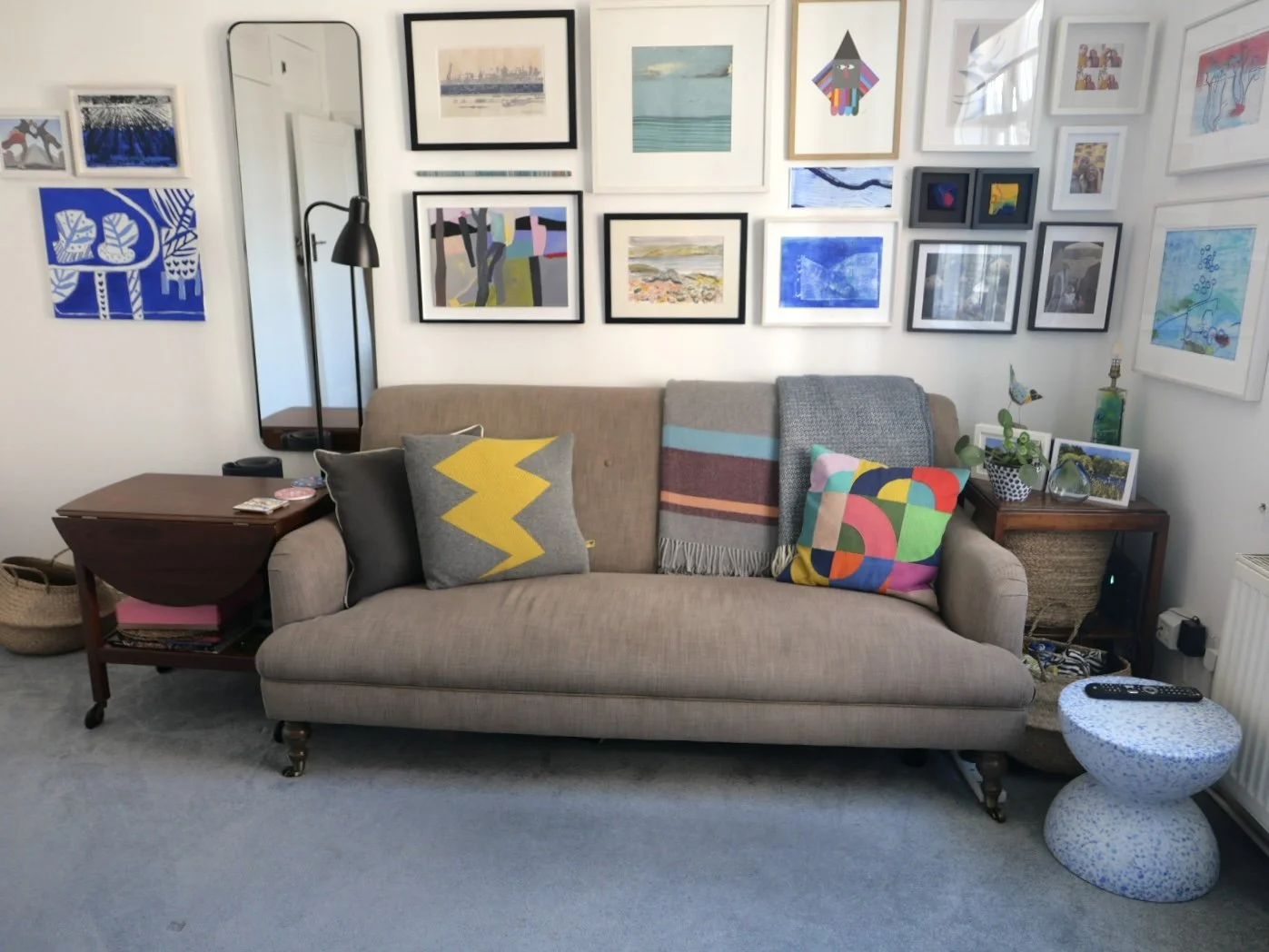
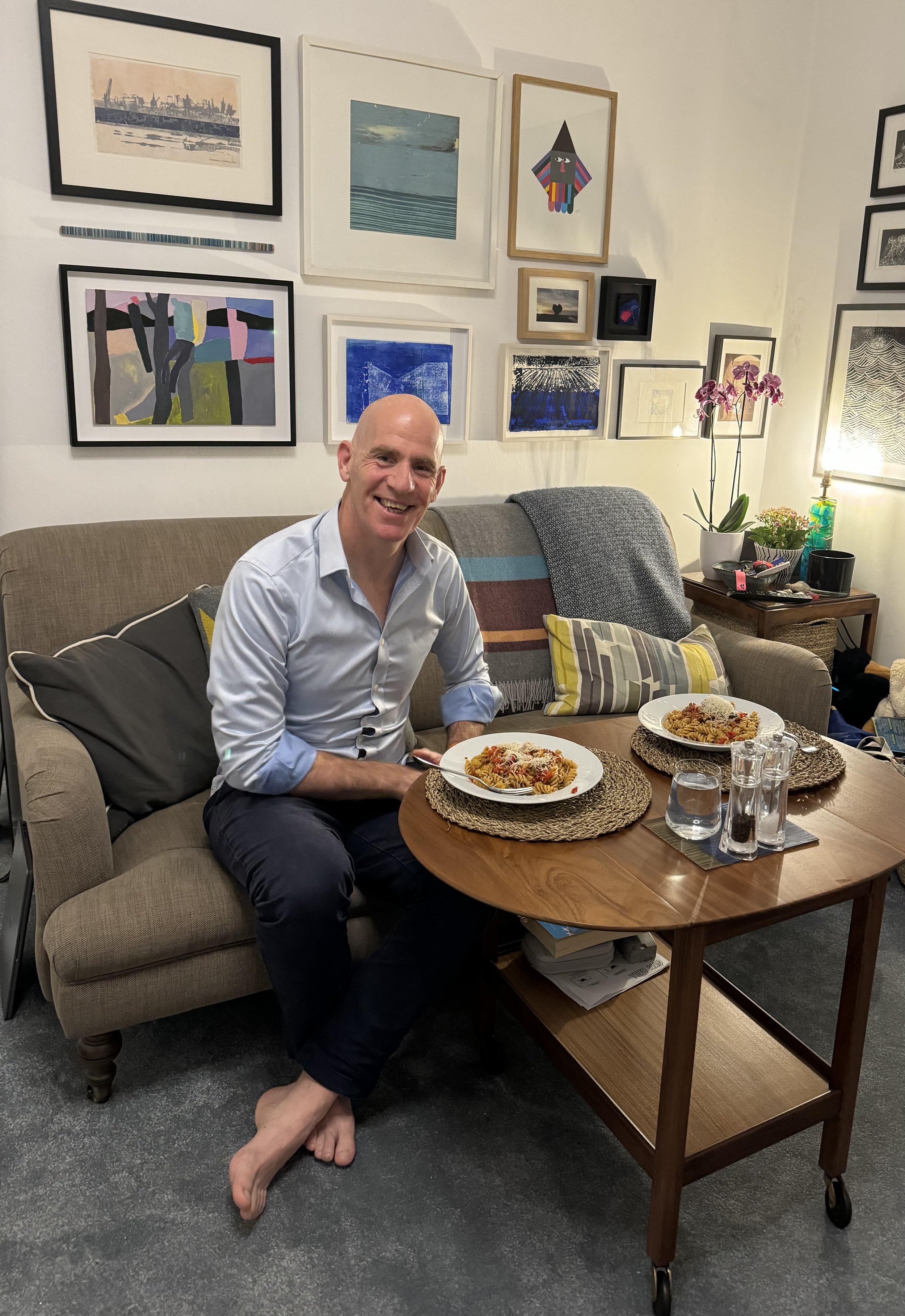
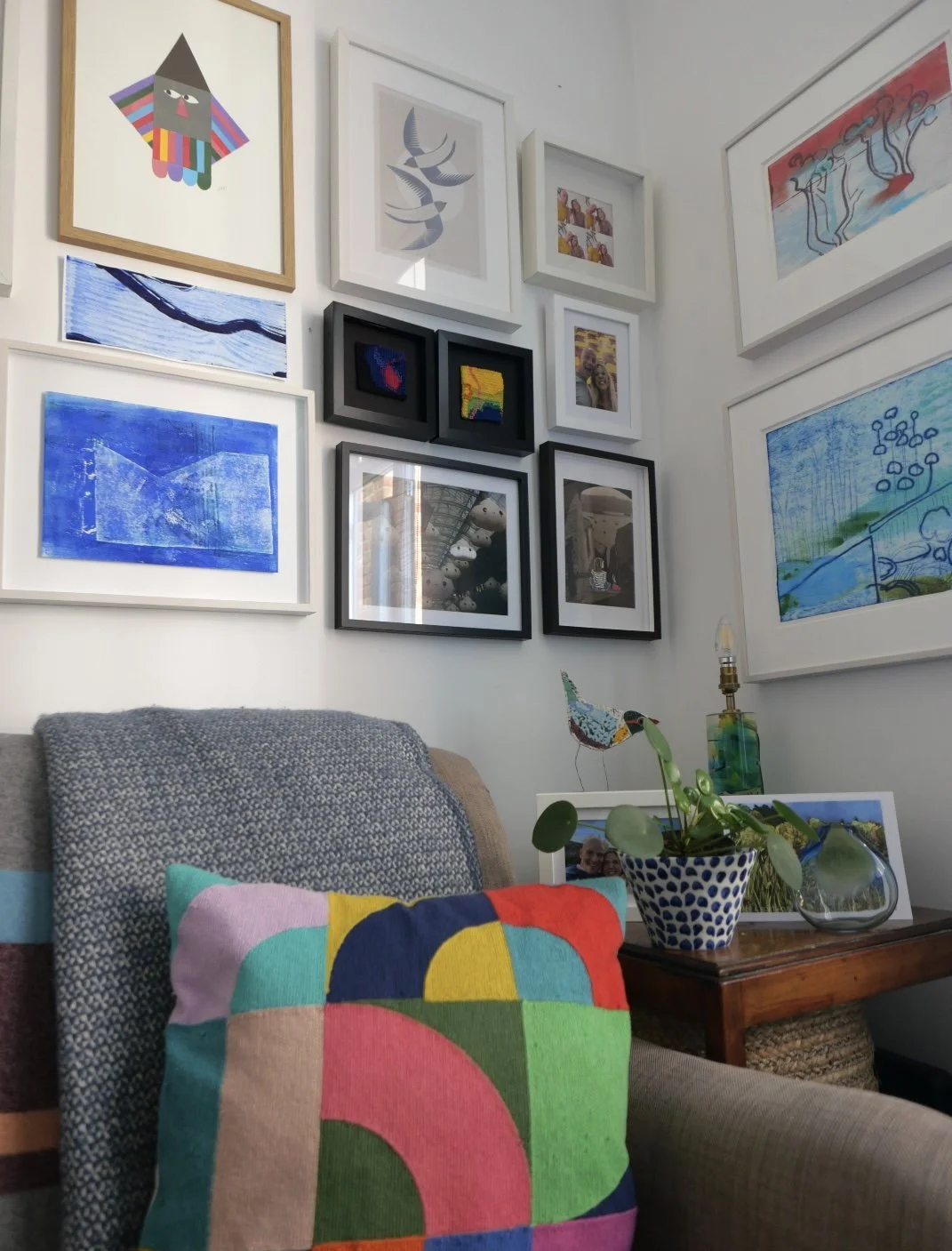
The sofa is long enough for two people to sit comfortably — something I feel is essential, even in a small home. Comfort should never be sacrificed for size. This one came from my aunt, and its cushions — including designs by Margo Selby and Bonnie Kirkwood — bring colour and texture into the space.
My dining table is a 1960 trolley table designed by Richard Hornsley for Fyne Ladye. It moves easily on wheels, folds open when needed, and works equally well as a desk, dining table, or side table beside the sofa. Pieces like this allow the space to remain flexible. Antique supplier @britishmodern.
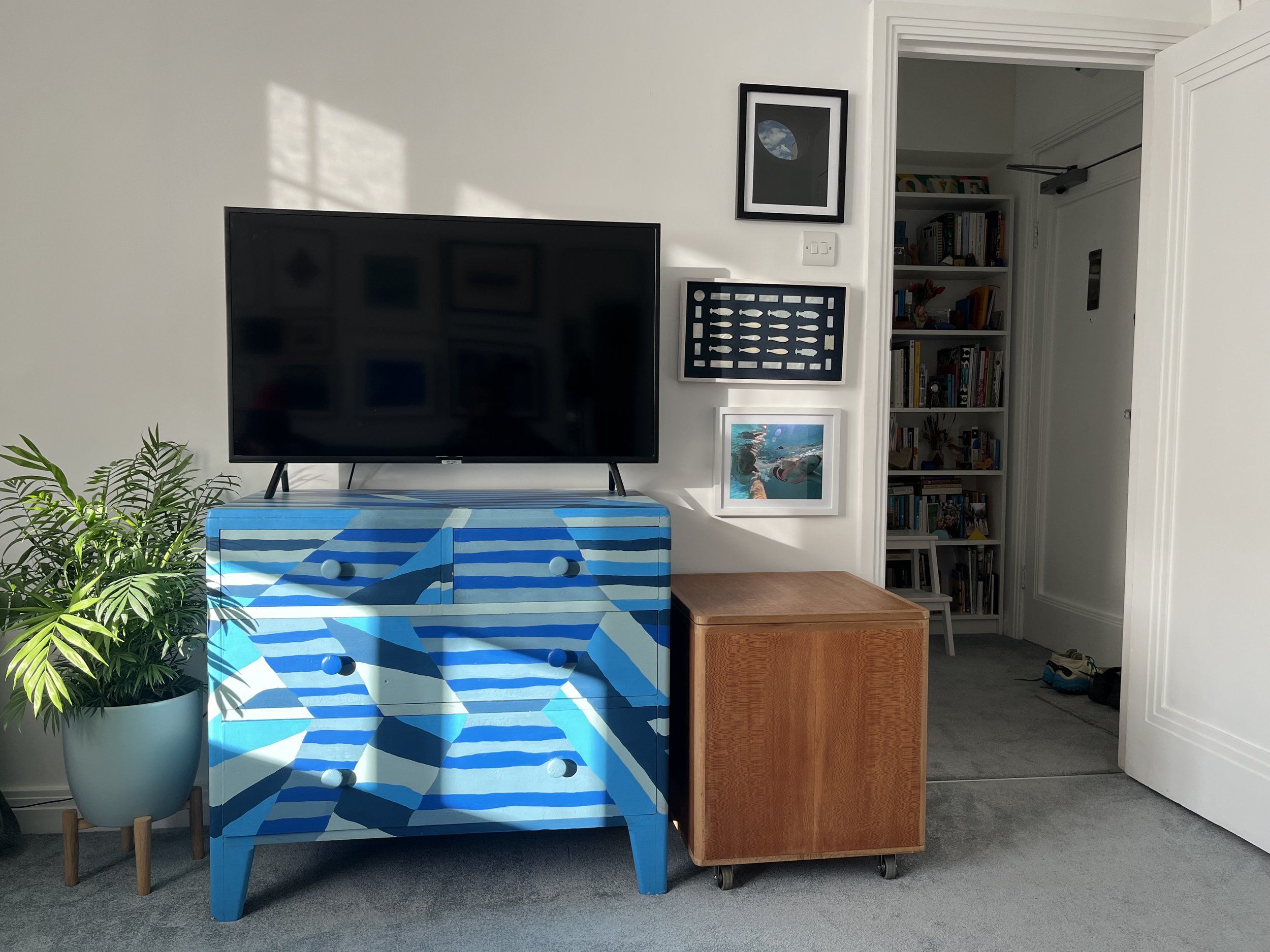
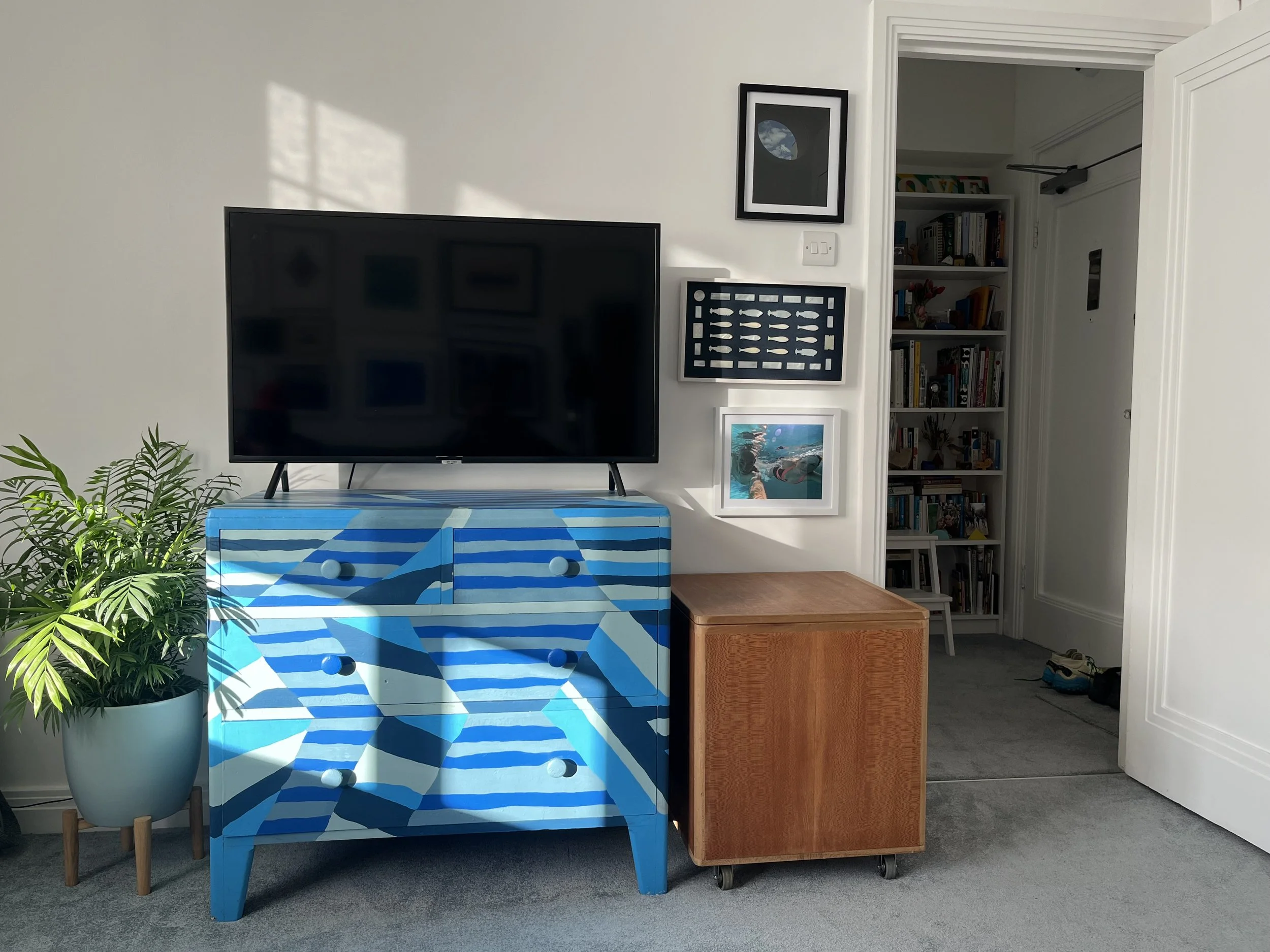
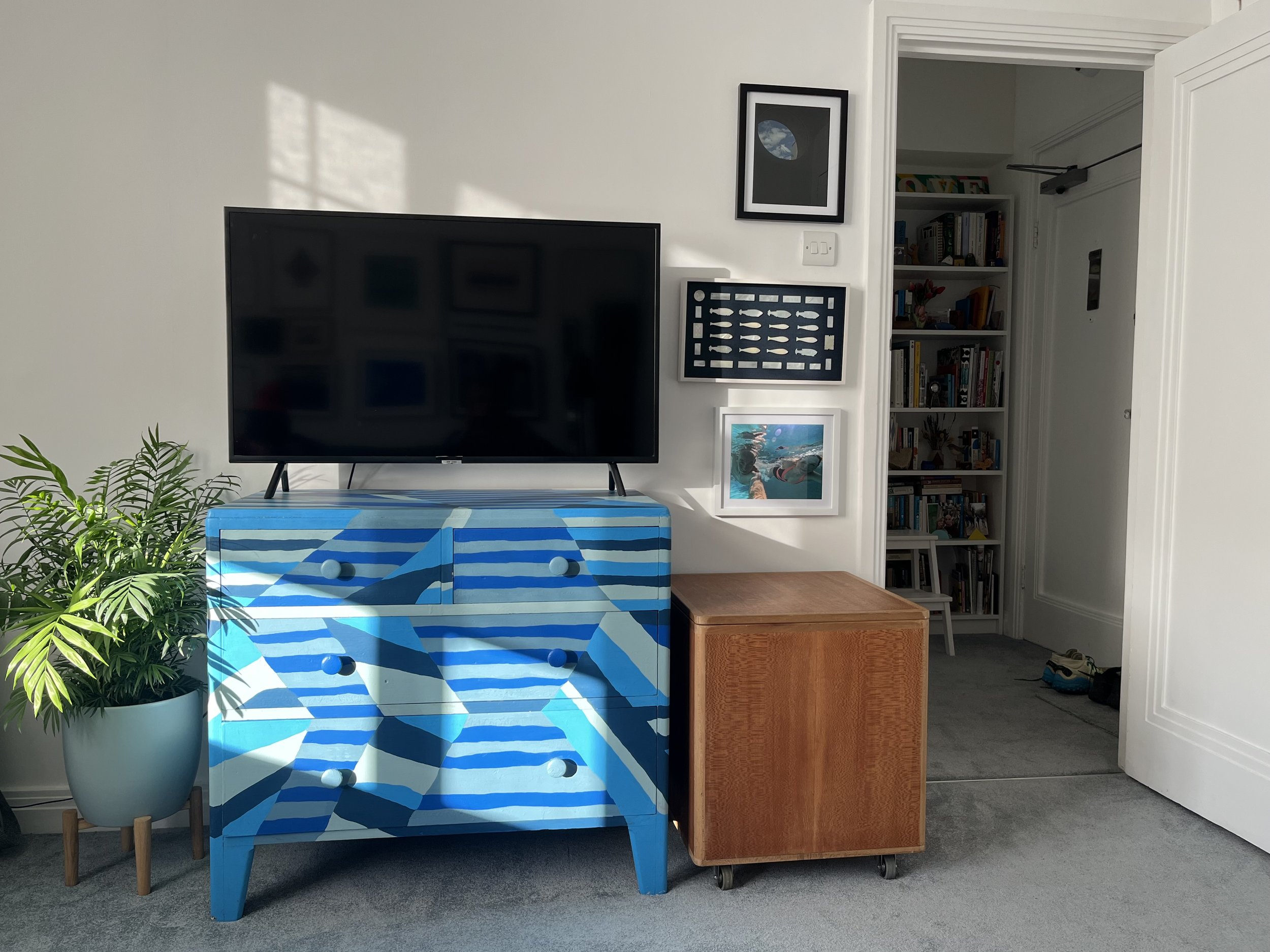
A Moon Stool made from recycled plastic functions as seating, a footrest, or a small table. My painted chest of drawers doubles as a TV stand. Multi-functional furniture allows the room to stay open rather than overcrowded. Stool from Wild Studio Copenhagen - Made from 100% recycled plastic produced in Denmark from locally collected materials and designed in Copenhagen.
Nothing is here without purpose.
Living with light
Light shapes how the room feels more than anything else.
During the day, natural light fills the space through the large window. In winter or darker moments, a ceiling light with adjustable tone supports working. In the evening, I rely on side lamps, creating warmth and signalling that the day is ending.
Lighting helps define the emotional rhythm of the room.
Blinds were kept simple and white — a sheer blind for daytime privacy and a blackout blind for night — allowing colour and pattern to come instead through artwork and textiles.
Creating a space for creativity
This room is surrounded by artwork — pieces by friends, artists I admire, and work I’ve collected over time. They bring energy, memory, and inspiration into everyday life.
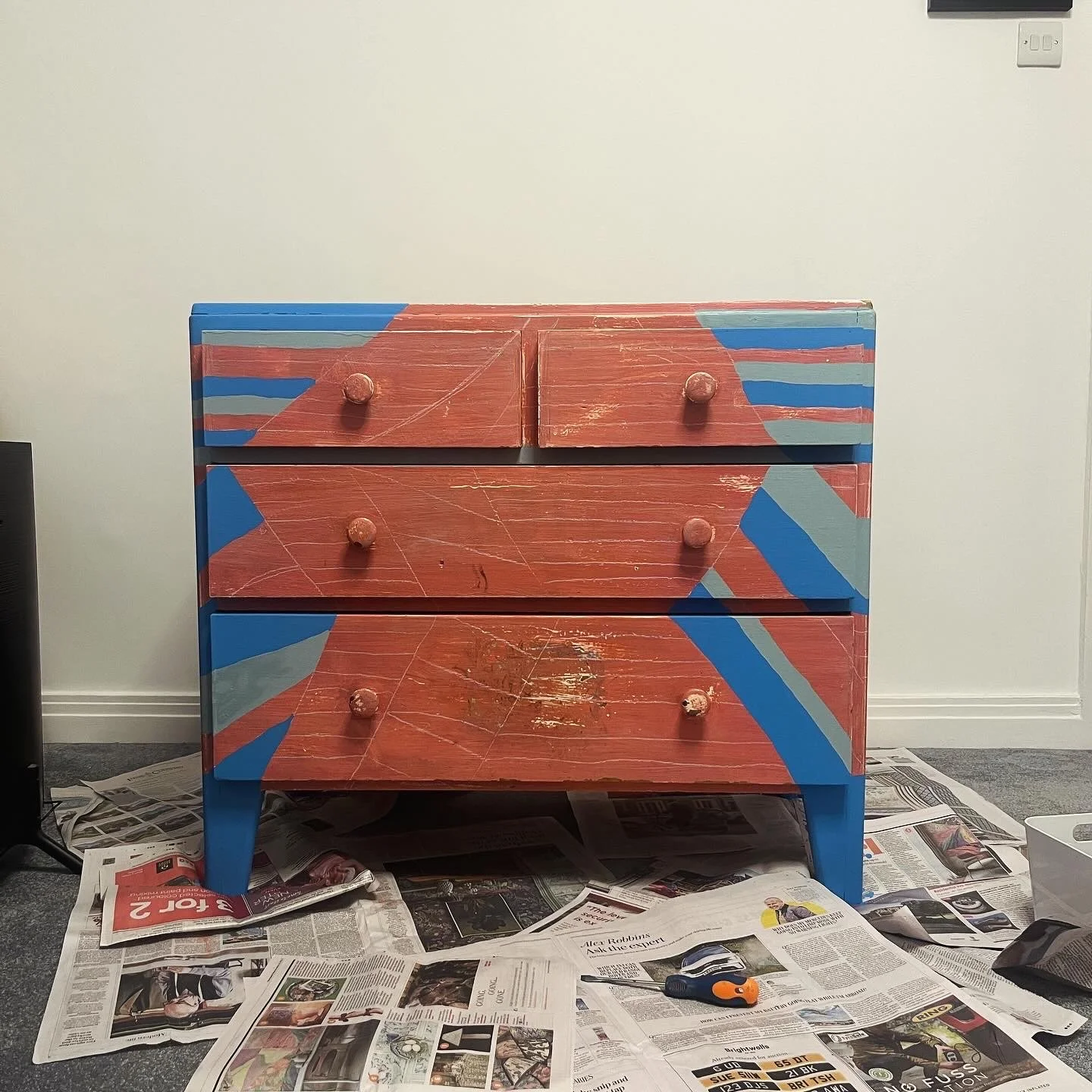
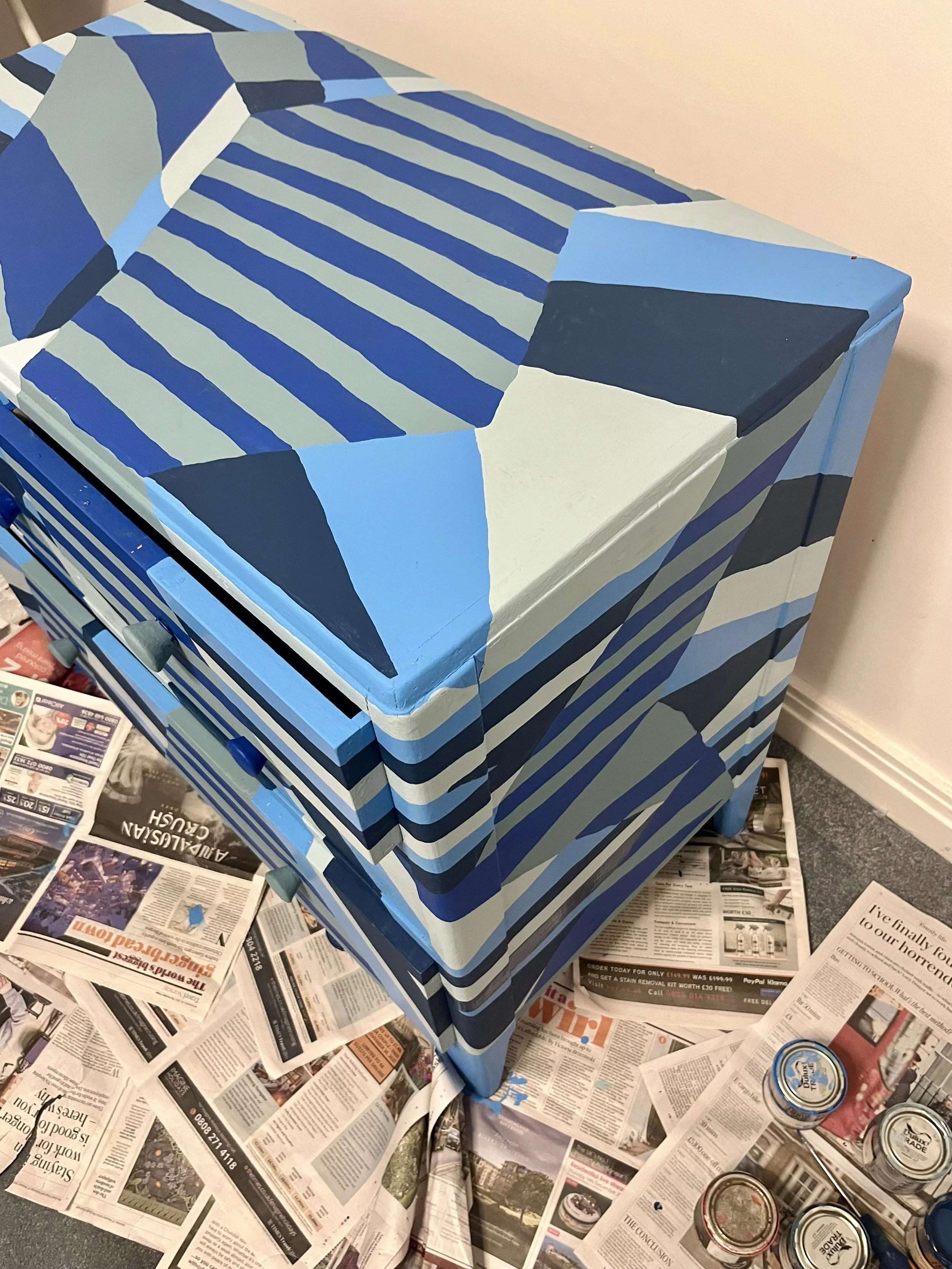
My painted chest of drawers, finished using leftover tester pots, adds colour and tells its own story of reuse. Small details like this give the space character without adding clutter.
Under my desk, a basket holds sketchbooks and materials, ready to carry to the park or to Hampstead Heath. Larger, messier work happens in my garden studio at my mum’s, allowing this space to remain calm.
Plants add another layer of life. Maidenhair ferns, a parlour palm, a money plant, and a heart cactus soften the room and improve air quality. Spraying them each morning has become part of my daily rhythm.
A living room created through intention
Living in a studio flat has taught me that a living room isn’t defined by walls — it’s defined by how you use it.
Through careful storage, flexible furniture, and daily rituals, this one room becomes many spaces: bedroom, office, studio, and living room.
By night, with lamps glowing and everything put away, it becomes somewhere to simply be.
And by morning, it begins again.
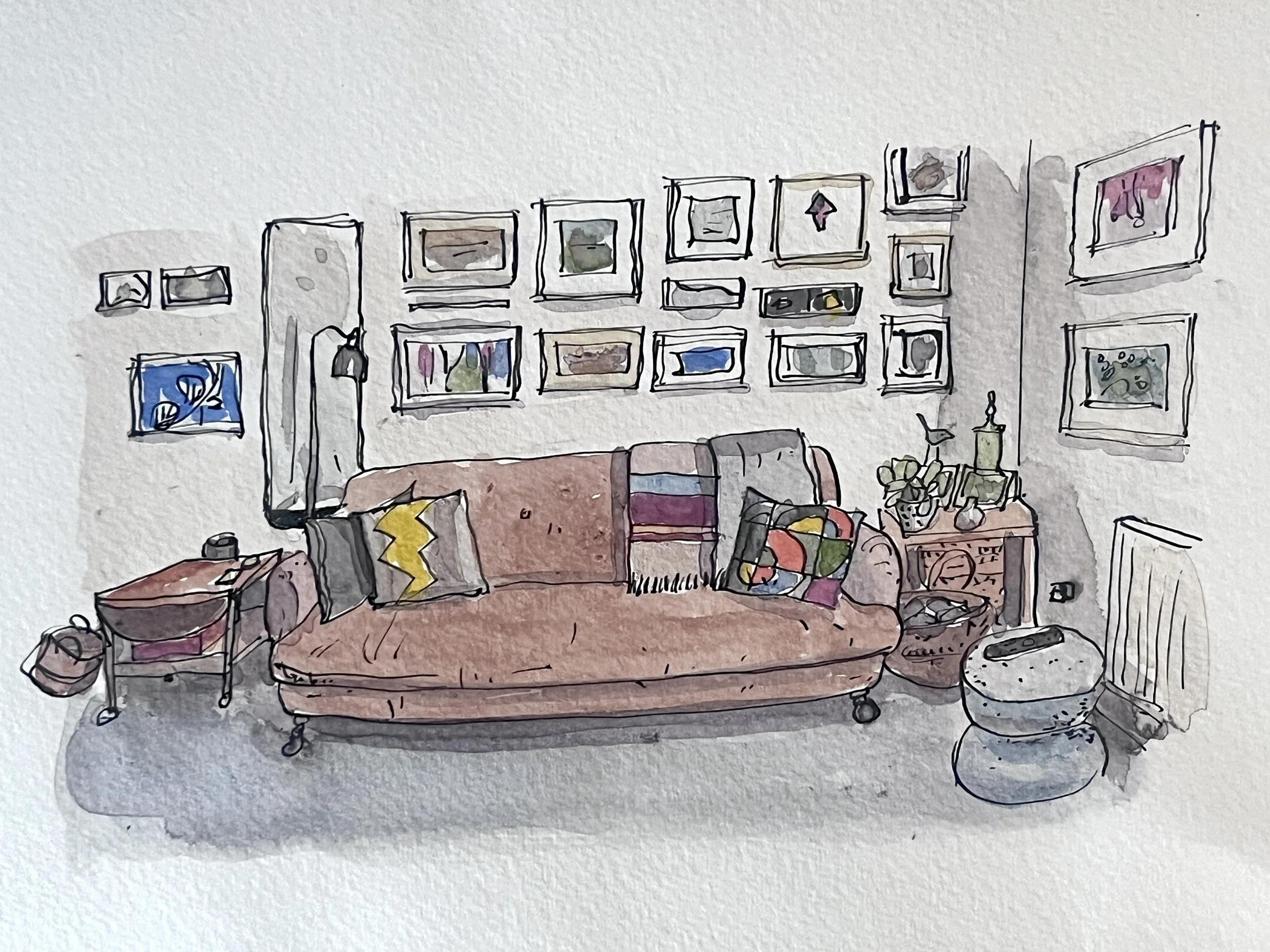
I love Fiona Gibson’s watercolour of my living space.
#InteriorDesign #StudioLiving #SmallSpaceDesign
#ResidentialDesign #FurnitureDesign #HealthyHomes
#SustainableDesign #AdaptiveReuse #DesignThinking
#InteriorArchitecture #CreativeLiving