
Making a Textile Collection. Week 4 — From Drawing to Design
British Seasons is an ongoing series documenting the making of my new fabric and wallcovering collection — from daily sketchbook drawings to finished textiles.
Post 4: From Sketchbook to Textile
Every design in British Seasons begins in my sketchbook — but it doesn’t stay there for long.
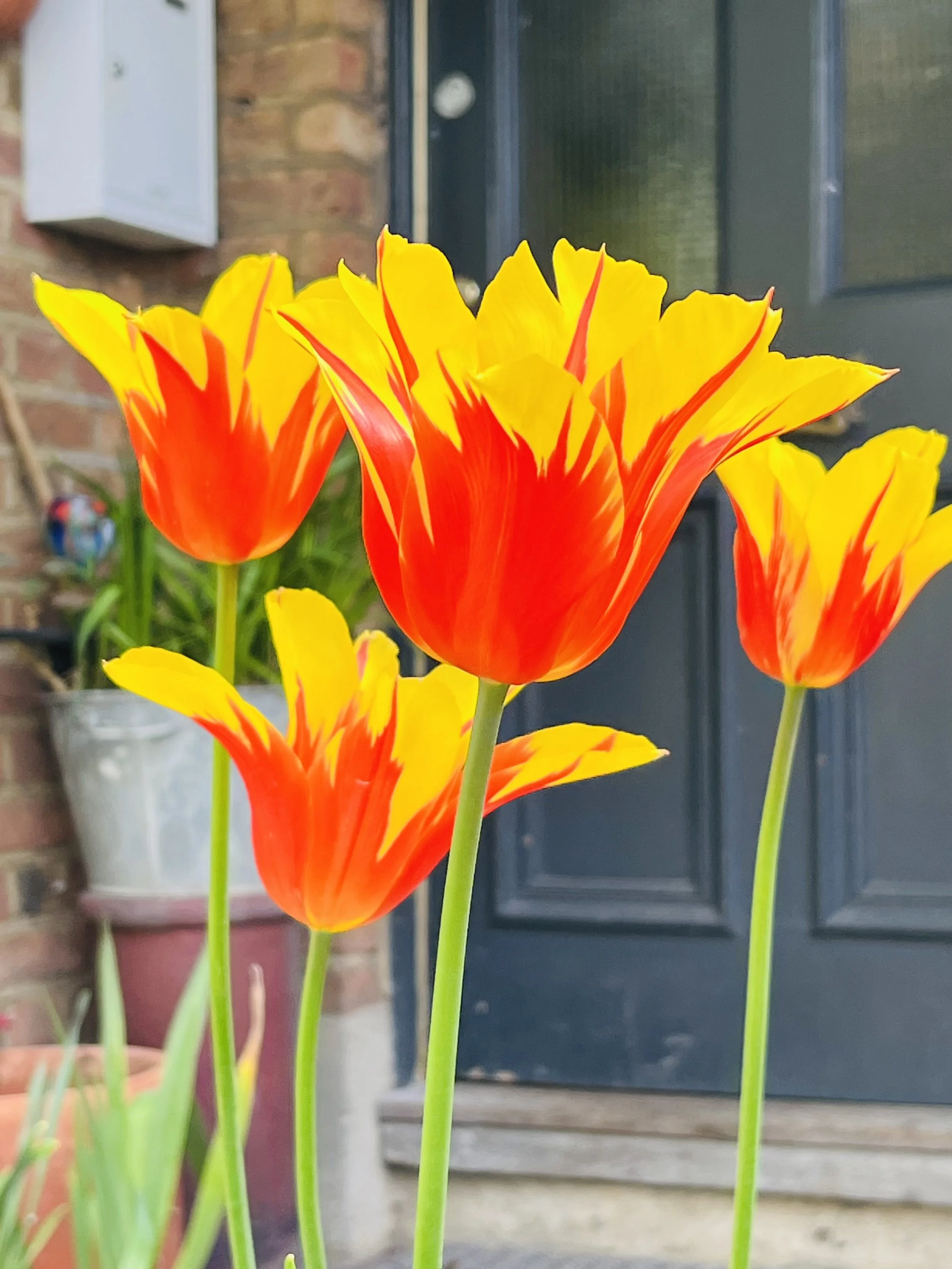
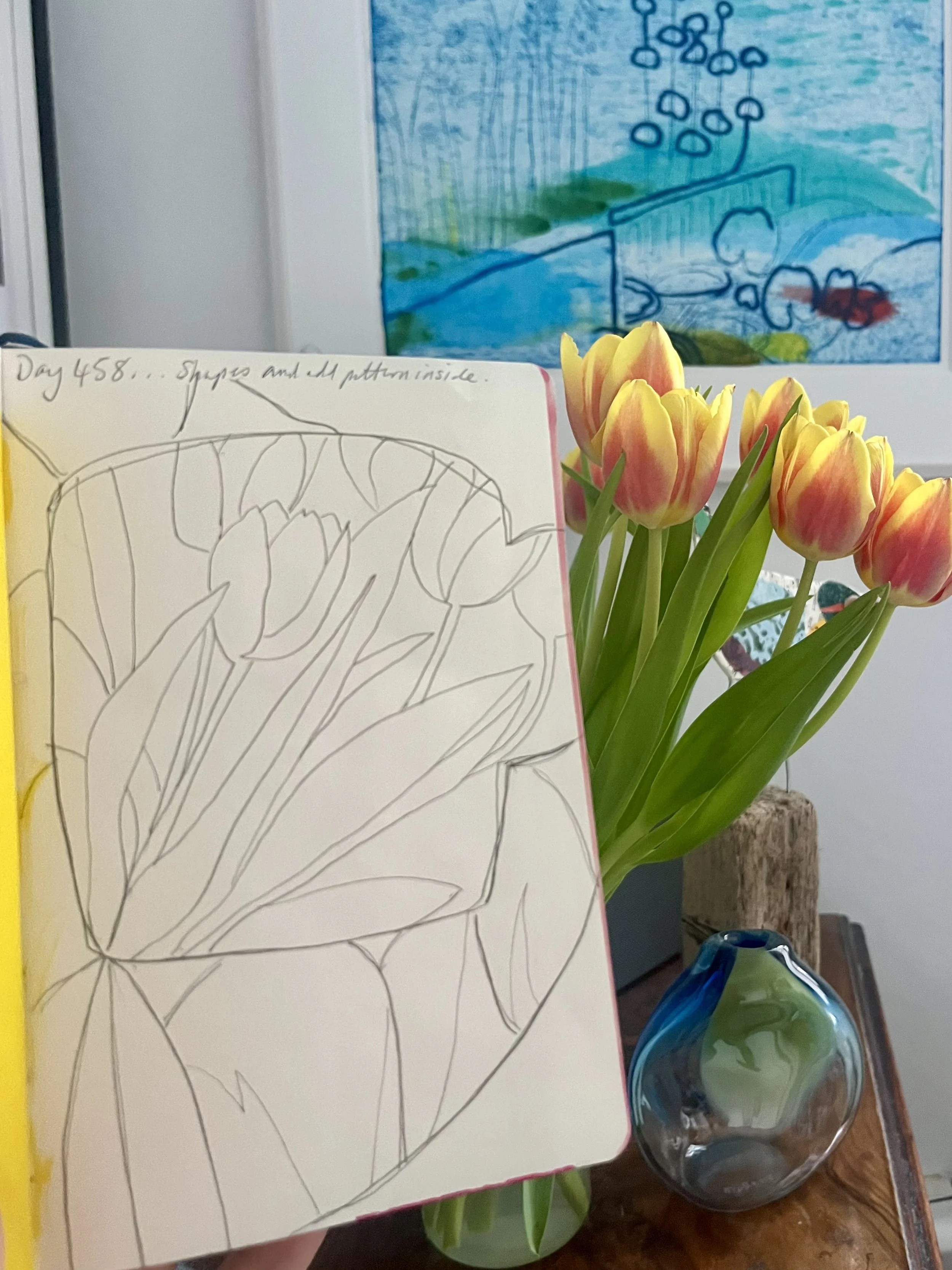
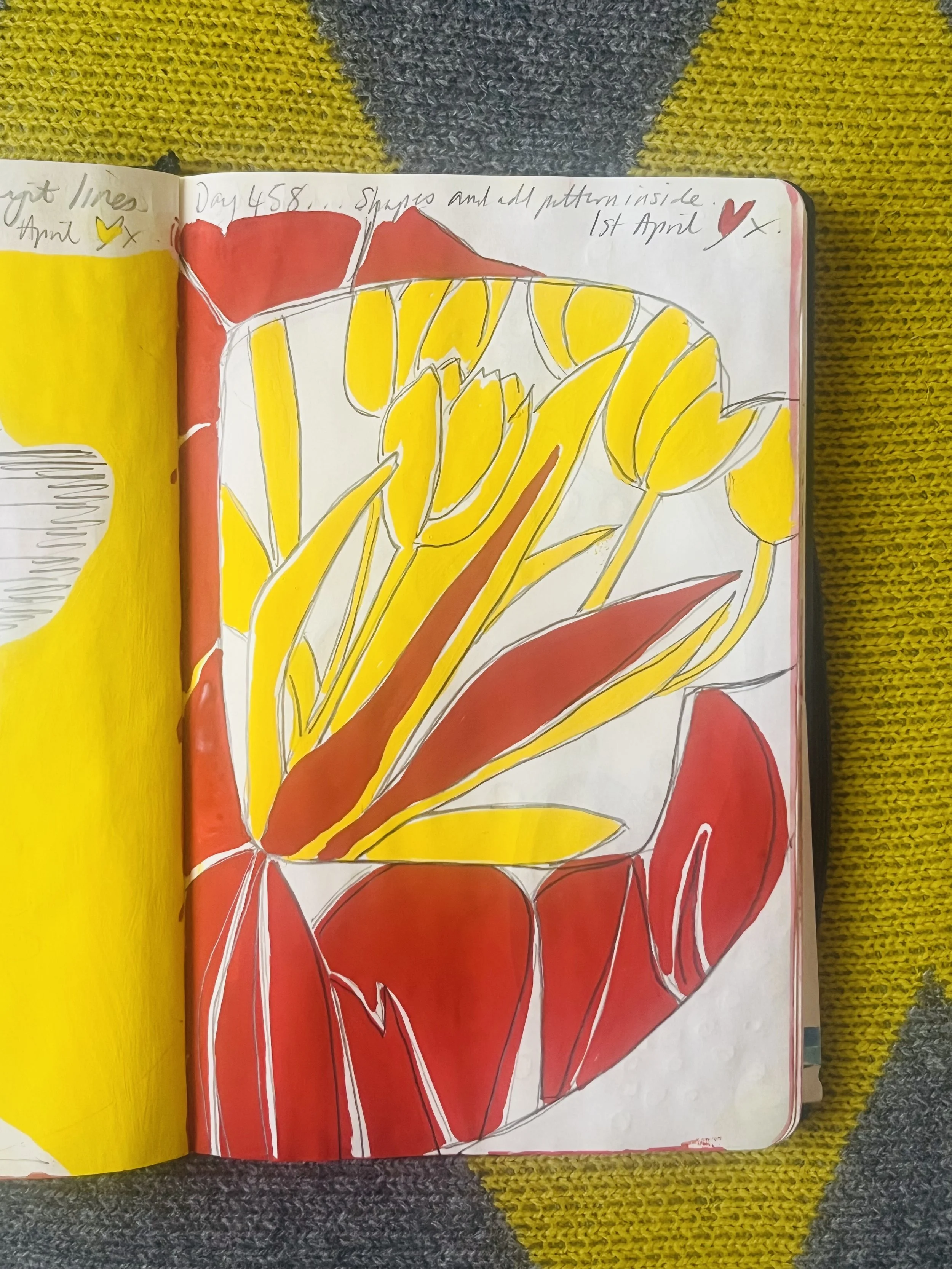
One of my daily prompts, Day 8 on my “List of 10,” is “Draw the shapes and add pattern inside.” These morning drawings often hold traces of the seasonal changes I’ve noticed on my run — crocuses pushing through winter soil, tulips unfolding in spring light, foxgloves rising in summer, and the shifting structure of autumn trees.
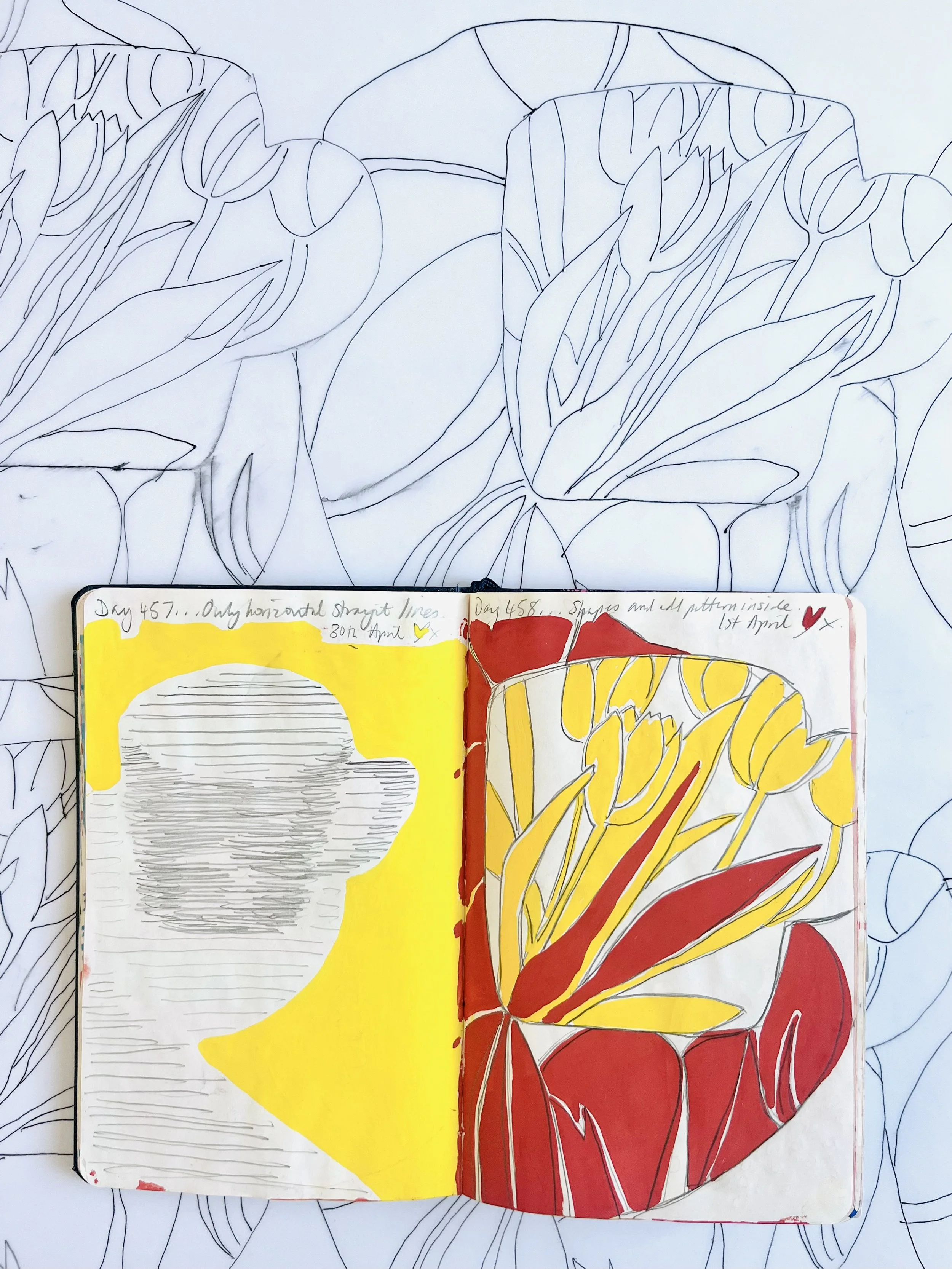
After more than two years of daily drawing, I selected four pages to form the foundation of this collection:
Crocus for winter,
Tulips for spring,
Foxglove for summer,
Autumn Trees for autumn.
But a sketchbook drawing is not yet a textile.
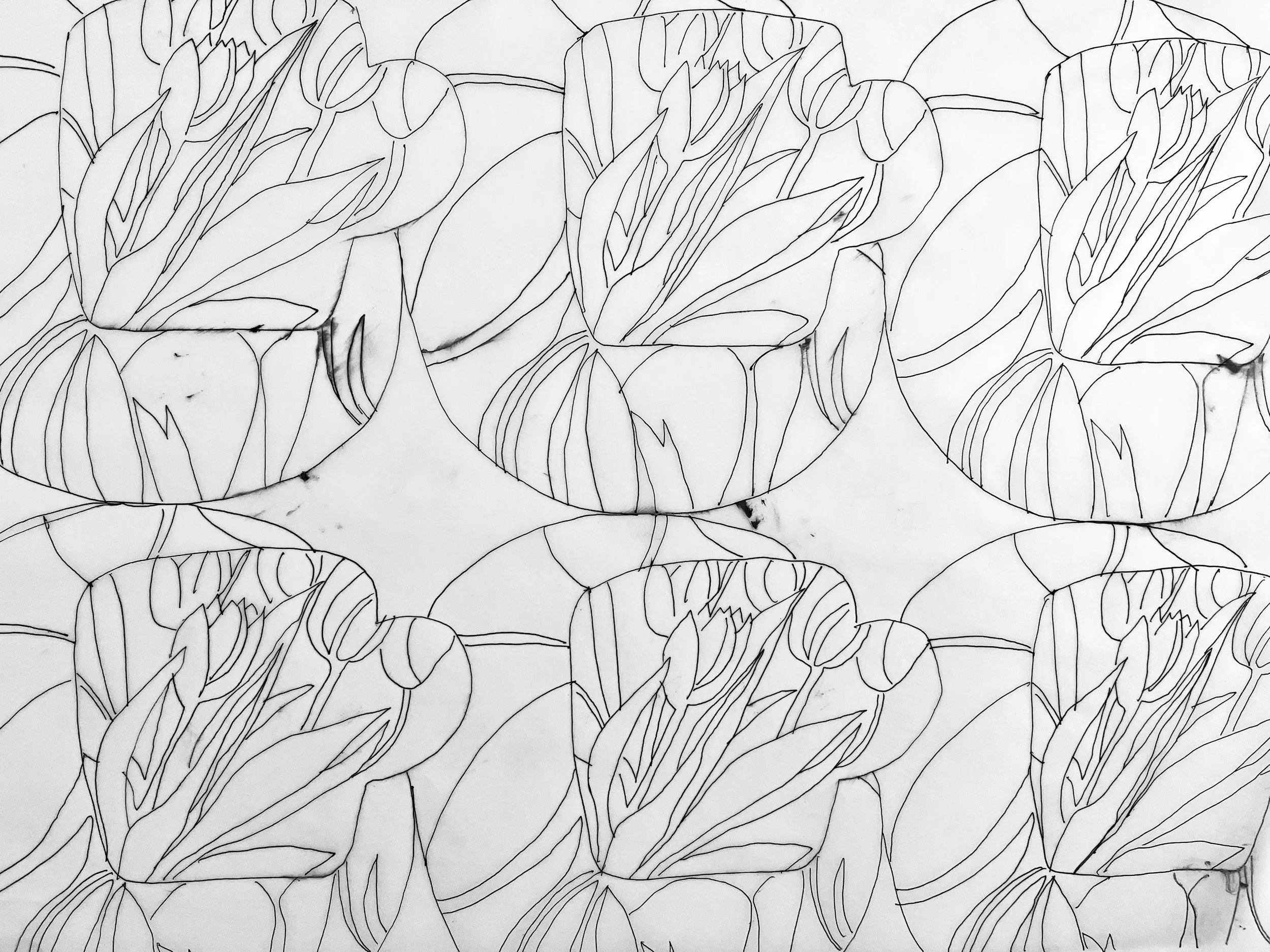
Working Out the Repeat
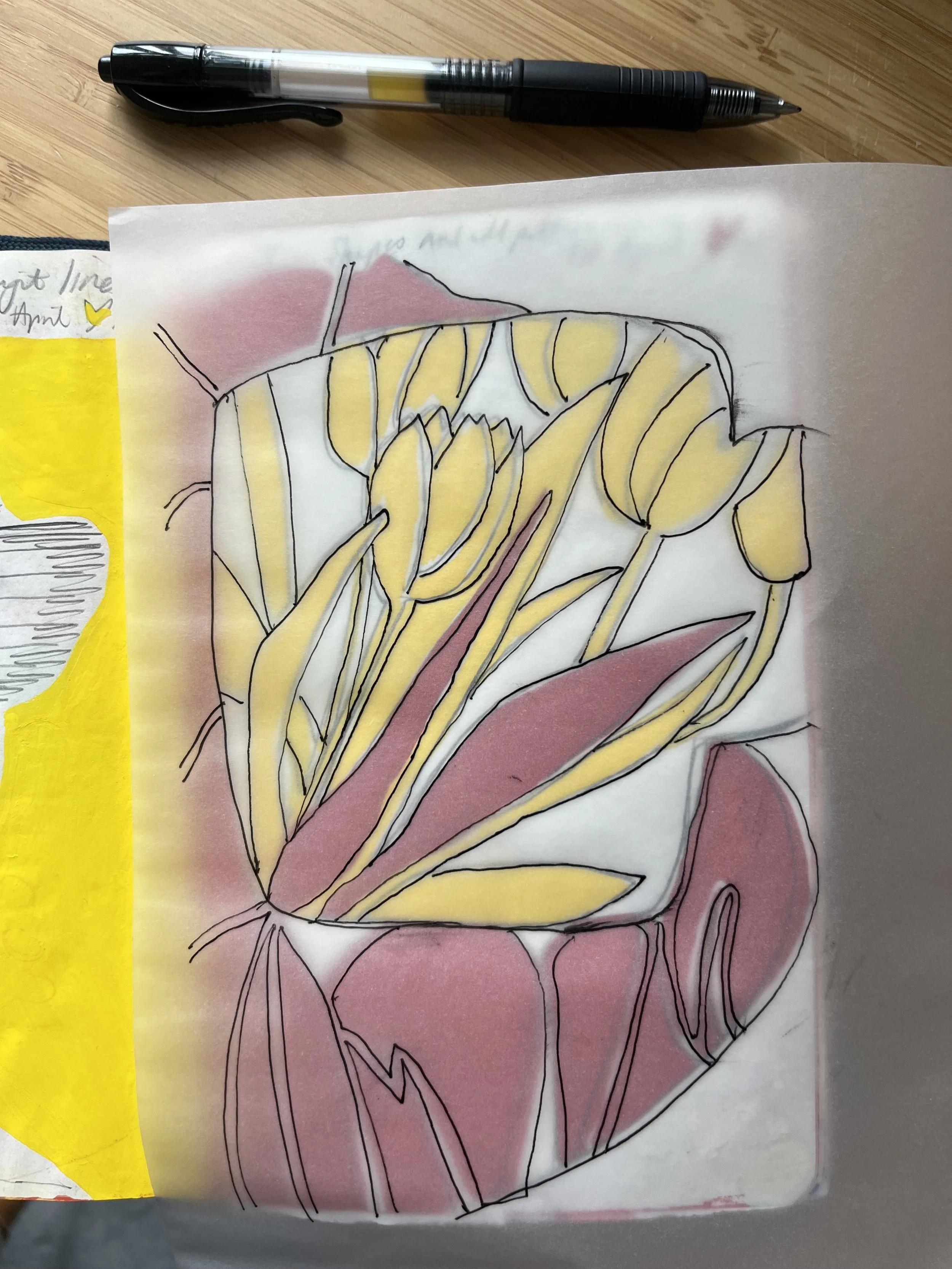
The first step is tracing paper.
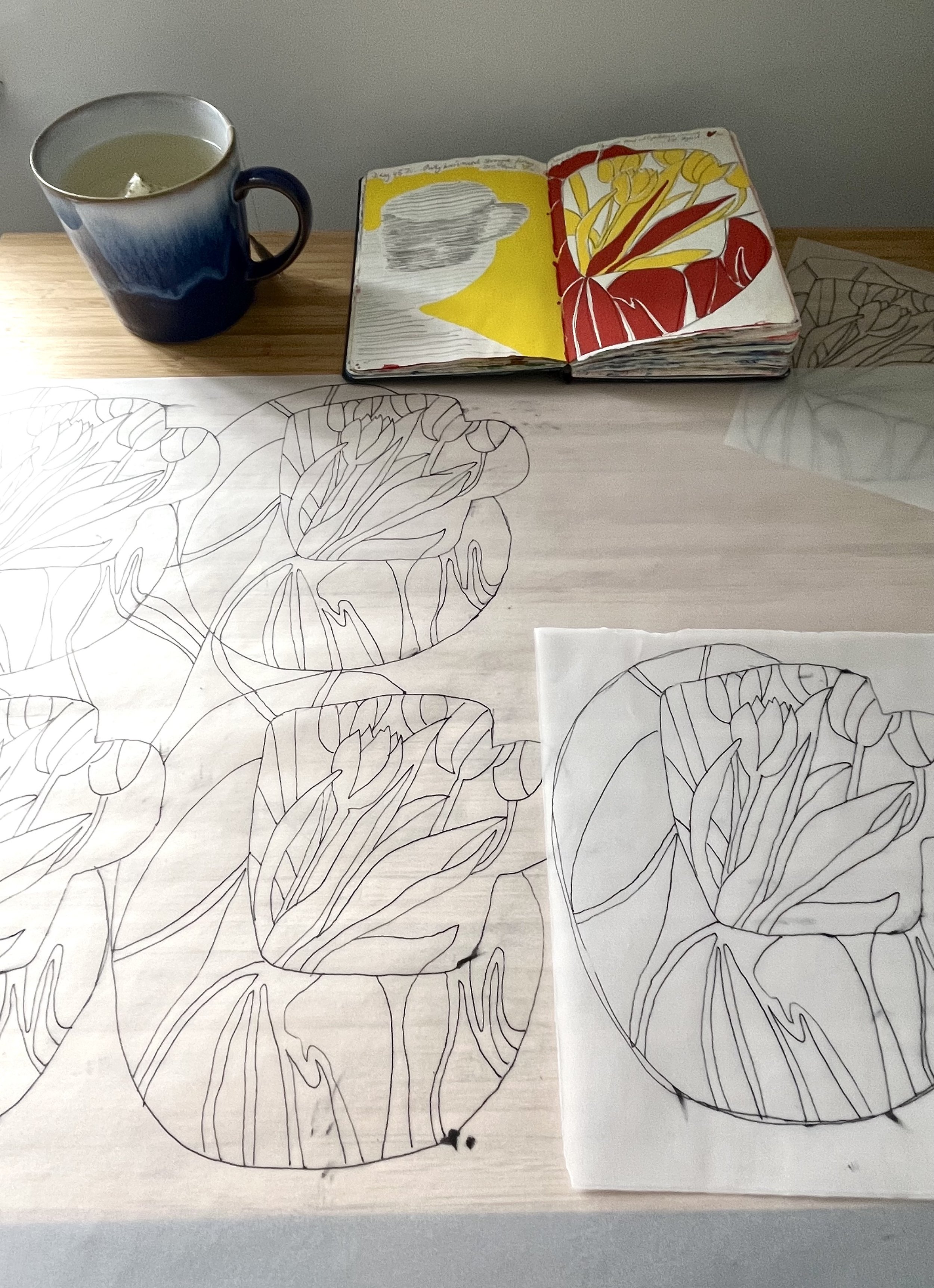
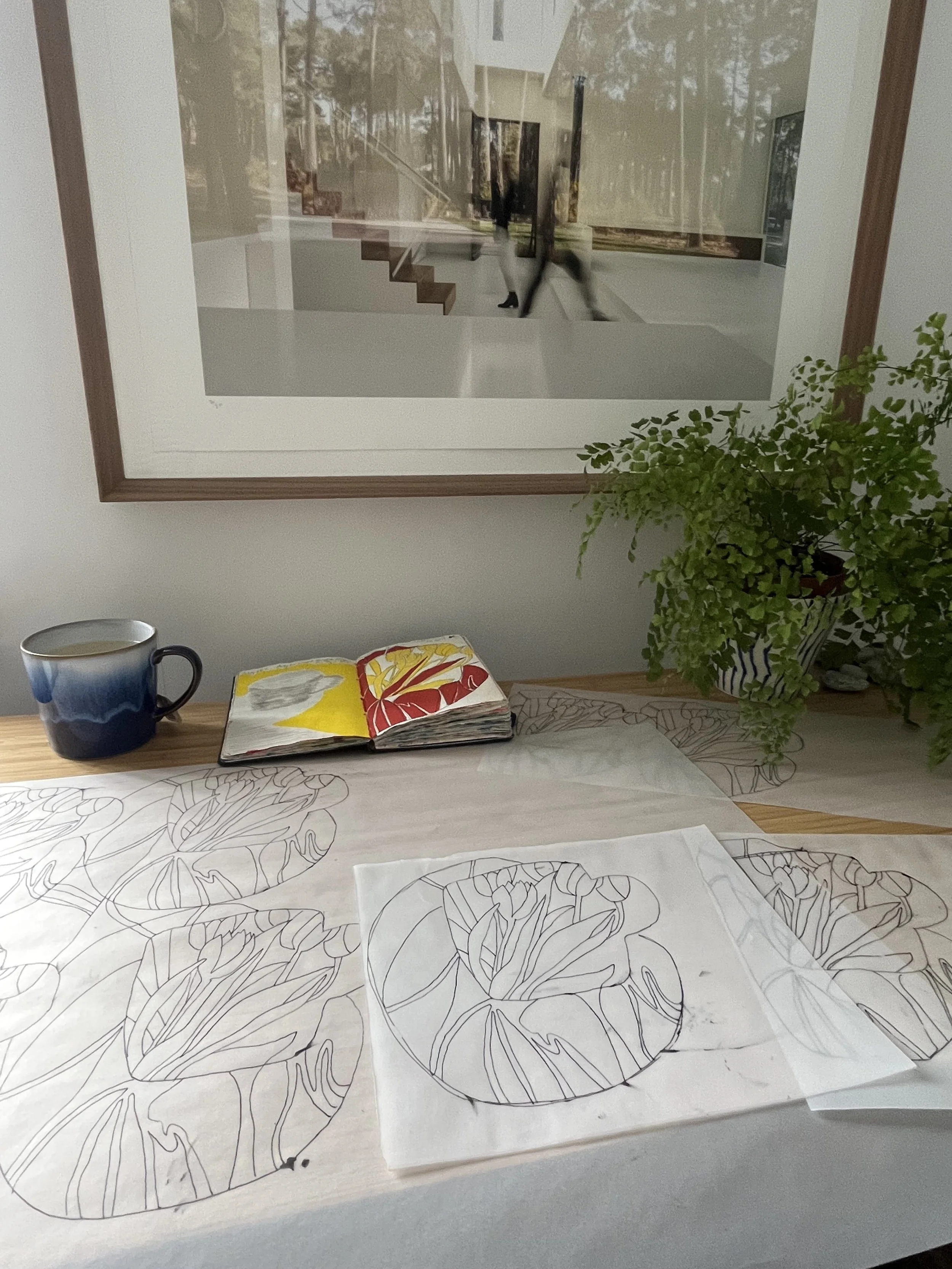
I lay it over the original drawing and begin to explore how the motif might repeat. Will it work best as a straight repeat? Or a half-drop? I redraw in pencil so I can erase, adjust, and refine as the pattern develops.
At this stage, I’m thinking constantly about the positive and negative space.
What will the gaps look like once the design is repeated across metres of fabric?
How will the eye travel across the surface?
Will the rhythm feel calm or energetic?
Scale also becomes critical. A drawing that works beautifully at A4 might feel too busy or too sparse when expanded to curtain width or across a wall.
Fabric vs Wallcovering
A design rarely translates exactly the same way from paper to product.
Fabric behaves differently to wallpaper. Curtains break a pattern into folds; the design must survive being interrupted by drape and movement. At the same time, it must also work flat — perhaps as a blind.
With wallcovering, I tend to think differently. I prefer wallpaper that can work across all four walls rather than as a feature wall, so I often rework a design to ensure it holds visual balance when fully immersed in a space.
Each decision shifts the drawing further from its original form — but ideally without losing its energy.
Layering and Building the Design
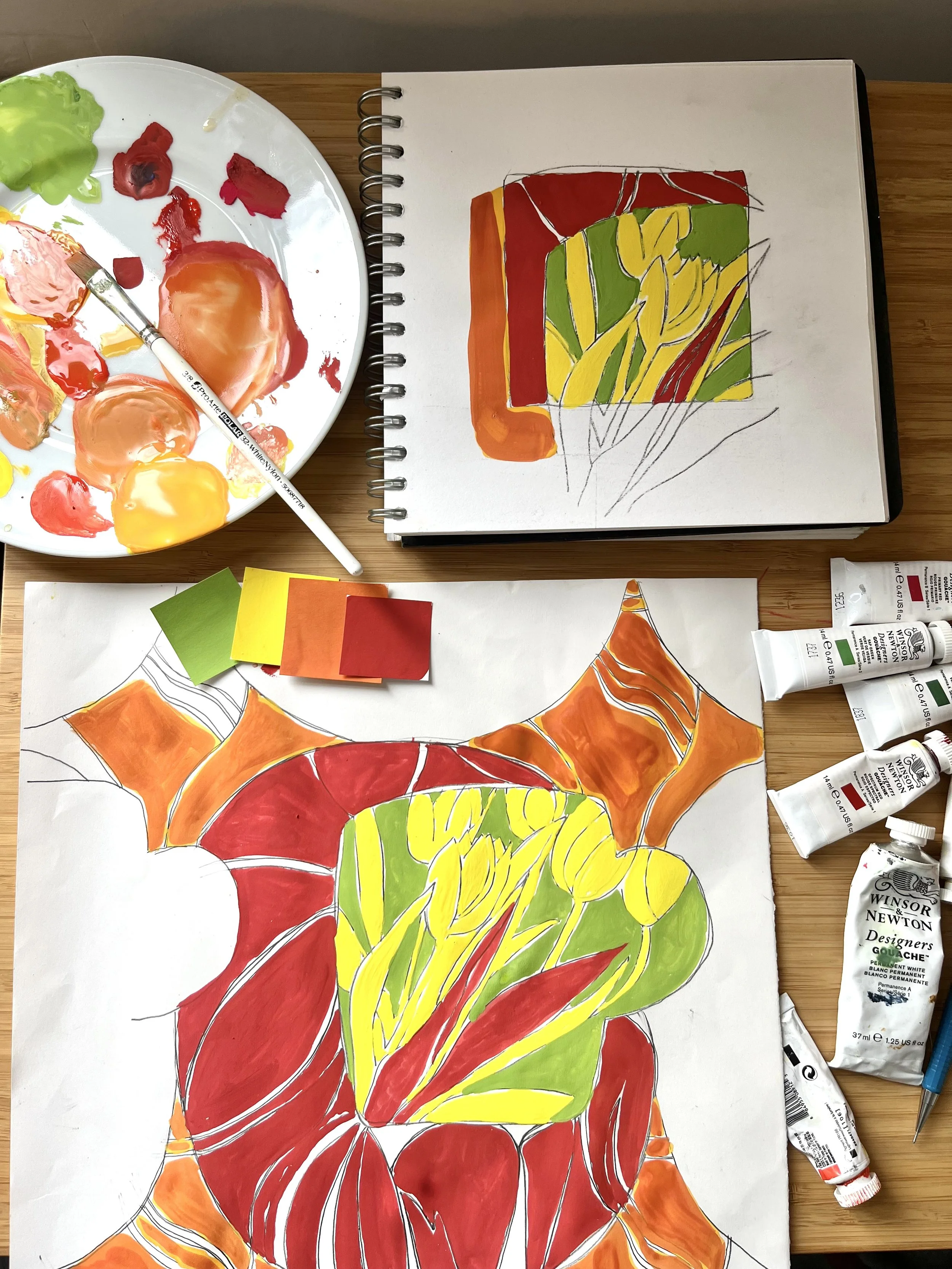
Once I am satisfied with the traced repeat, I begin to define each colour layer.
Using black ink, I paint each colour area separately so they can later be scanned and built into the design digitally. Breaking the pattern into layers allows flexibility — tones can be adjusted, depth can be introduced, and variations developed without losing the integrity of the hand-drawn line.
This is where the painted effect begins to emerge.
Colour as Process
Although the design eventually moves onto screen, I still mix colour by hand.
I begin by painting small squares — testing tone, density, warmth, and balance. I love this stage. Mixing colour is both meditative and instinctive; it tunes me into the atmosphere of the collection.
British Seasons has been a particular joy in this respect. Each palette reflects subtle seasonal shifts — the cool restraint of winter, the clarity of spring, the saturation of summer, the grounded warmth of autumn.
I record these experiments in a colour diary. In many ways, these pages are artworks in their own right.
What begins as a five-minute morning sketch slowly transforms — through tracing, repetition, layering, and colour — into a textile designed to live within interiors.
The challenge is always the same:
to retain the spontaneity of that first mark while allowing it to evolve into something that works technically, practically, and beautifully at scale.
More soon, from the studio.
#BritishSeasons #FromSketchbookToTextile #TextileDesign #SurfacePatternDesign #WallpaperDesign #FabricCollection #DesignProcess #ColourDiary #CreativePractice #InteriorTextiles #BritishDesign #PatternRepeat #StudioLife