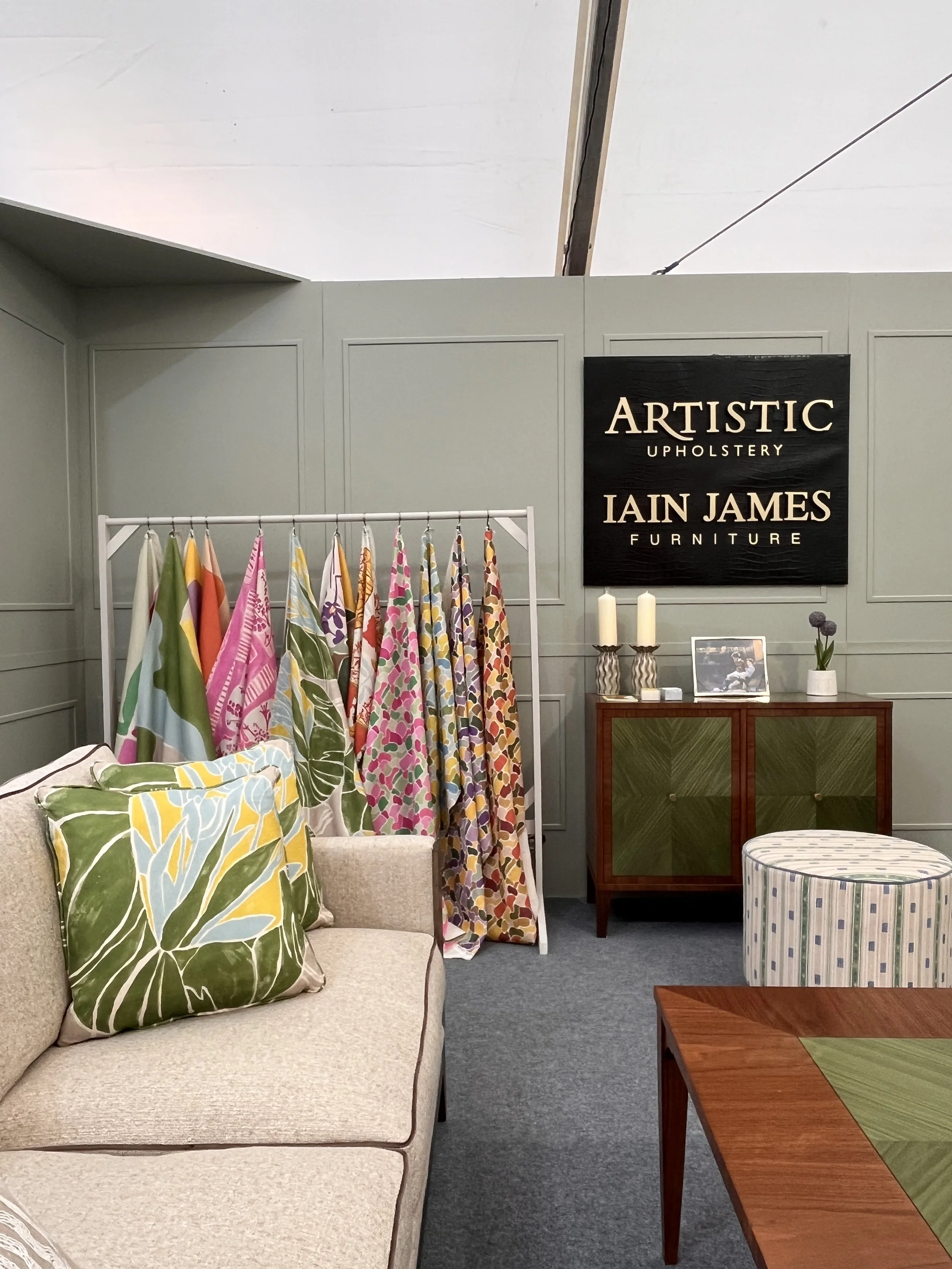
Launching at Design Central Trade Show
Launching my new fabric collection at Design Central, Capesthorne Hall — and reflecting on why craftsmanship, British manufacturing and human creativity matter more than ever.
A special launch for British Seasons
Design Central was a wonderful place to launch my new British Seasons fabric collection at Capesthorne Hall.
A huge thank you to Cath and her team for creating such a special show. It is a pleasure both to exhibit and to visit, with so many talented makers, designers and businesses coming together to celebrate interiors, craftsmanship and creativity.
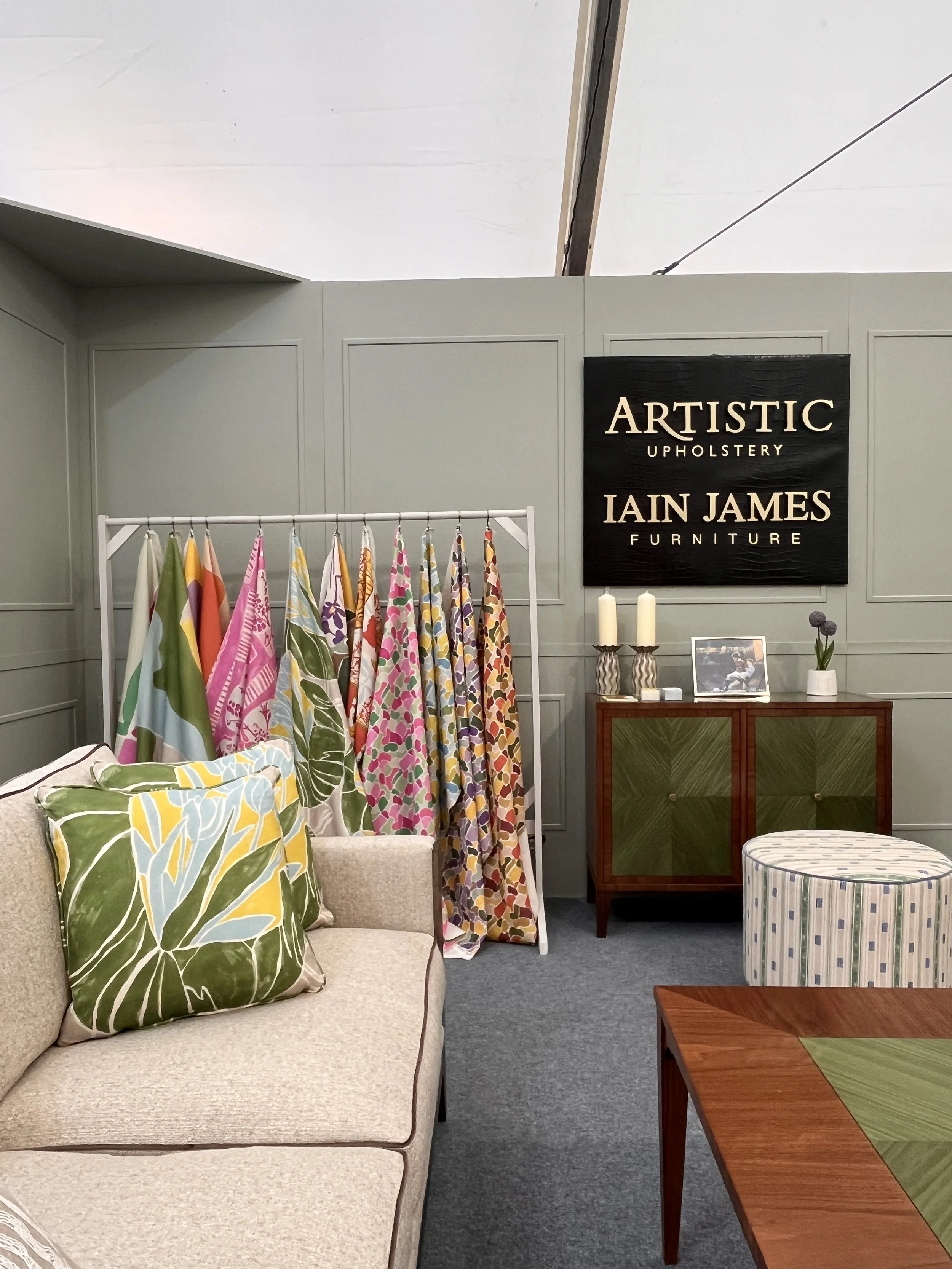
I was delighted to join Artistic Upholstery and Iain James Furniture on their stand. Both create beautiful, high-quality upholstered and cabinet-making work, and it felt particularly appropriate to show my fabrics alongside pieces made with such care and skill.
It was also very special to be back at the show with Mark Wilkins. Having worked together before, it was a real pleasure to be working alongside him again. We thoroughly enjoyed talking to visitors about my fabrics, sharing the inspiration behind the collection and seeing how people responded to the colours and patterns.
Launching British Seasons felt like an important milestone after eight years away from creating my own collections.
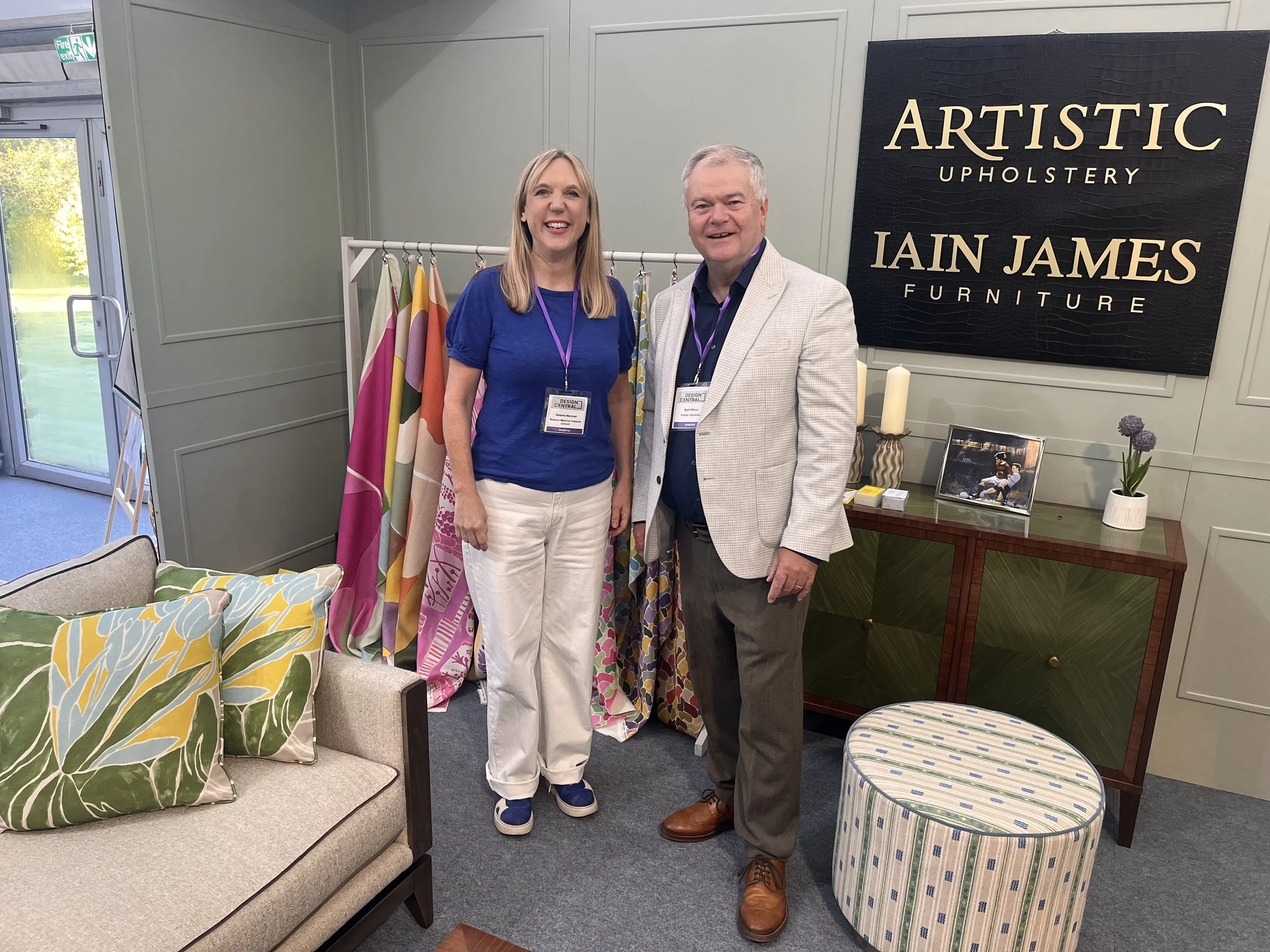
Natasha Marshall & Mark Wilkins at Design Central 2026
The collection has grown out of my daily sketchbook practice, Sketching Not Scrolling, which began as a simple commitment to spend five minutes every morning drawing what is in front of me rather than reaching for my phone.
Over hundreds of mornings, with tomorrow being the 1000 day in a row, I have drawn my breakfast, what’s in front of me, small details of everyday life. These observations have gradually developed into a visual language of my own, informing the patterns and colour combinations that make up British Seasons.
The collection comprises twelve large-scale designs printed on 100% linen, inspired by the changing colours and rhythms of the British seasons. From tulips, foxgloves, oak leaves and crocuses to more abstract explorations of reflection and shape, each design captures something of the natural world and the way we experience it.
Colour is central to the collection. I love how it can transform a room, influence our mood and create an emotional connection with a space. Pattern brings another layer, adding movement, personality and a sense of individuality.
British Seasons is designed to bring these qualities into our homes, with fabrics that celebrate nature, colour and the joy of living with pattern.
And, importantly to me, the collection is designed and manufactured in the UK.
That brings me to some of the conversations that made this year’s Design Central particularly memorable.
One of the highlights was an impromptu lunch with Cath and Patrick Grant, where we talked about British manufacturing and the future of our textile industry.
I subsequently went along to Patrick’s talk, which I found hugely thought-provoking. His ideas resonated with so many of my own beliefs about the importance of making things, valuing skills and creating meaningful work.
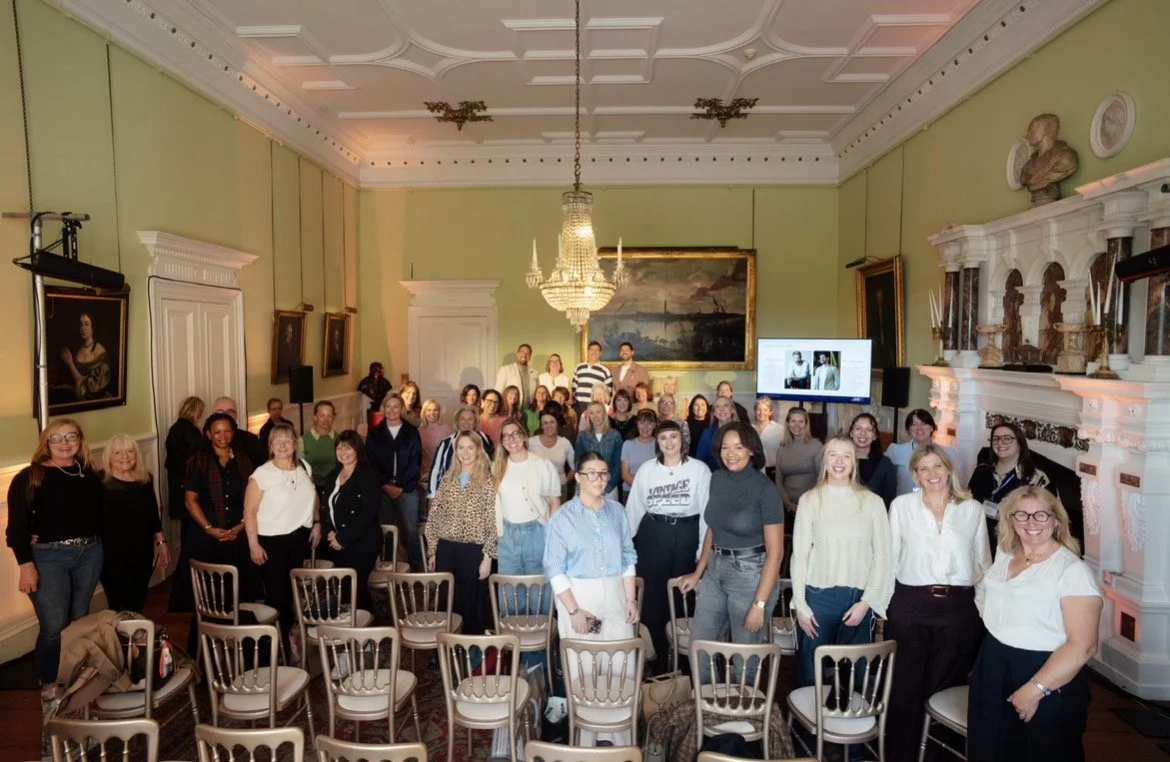
Selfie with Patrick Grant at Design Central 2026
His book Less explores how we might rethink our economy and the way we produce and consume. One of the ideas that stayed with me was the importance of building back people’s pride in their work.
What would it look like to design an economy whose primary goal was to give every member of society the opportunity to enjoy a great education and a rewarding job?
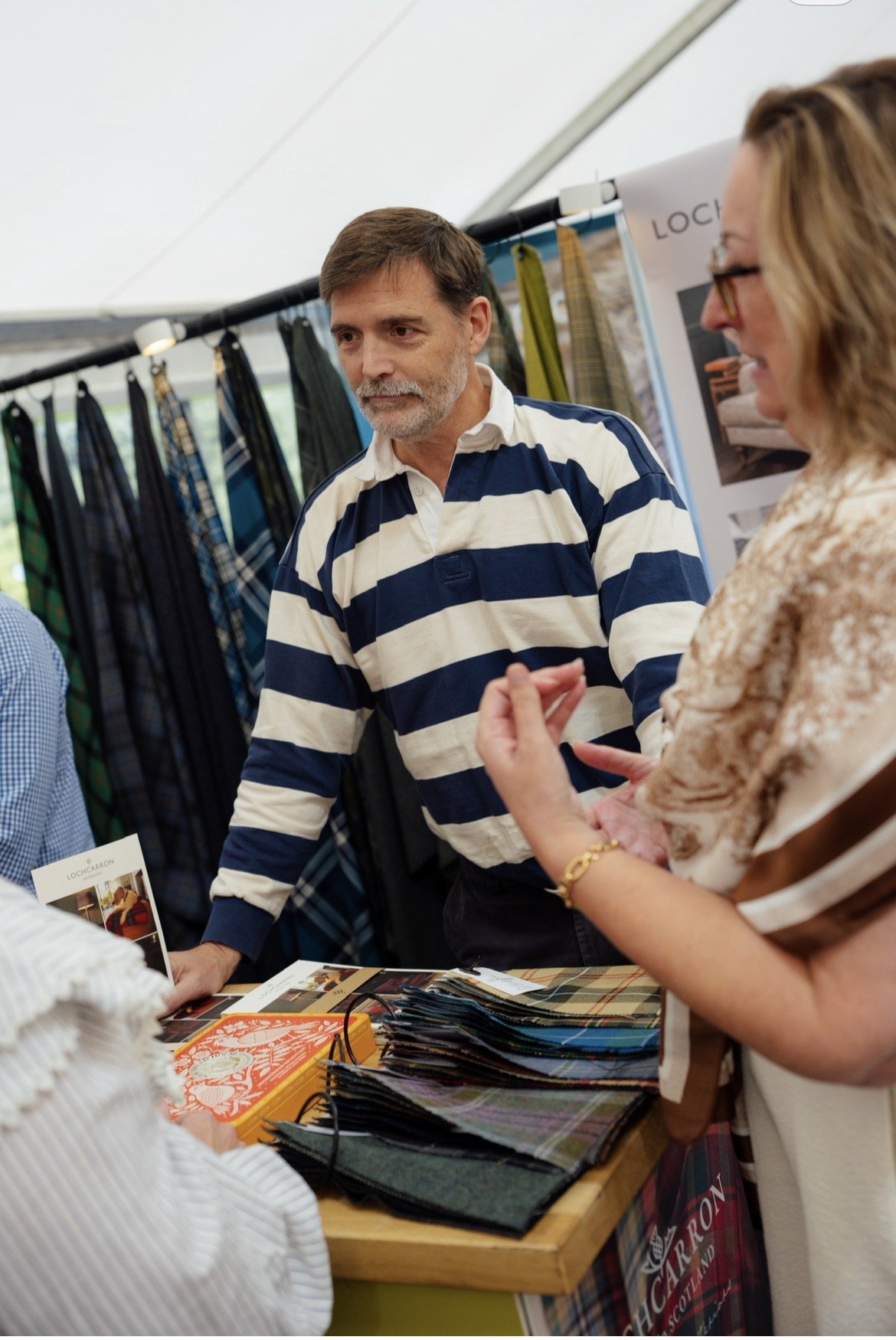
Patrick Grant talking with LochCarron at Design Central 2026
British manufacturing: a conversation worth having
It is a question that feels particularly relevant to textiles.
Britain has an extraordinary heritage of textile design and manufacturing. We have knowledge, skills, creativity and a history of making beautiful things. Yet these capabilities cannot be taken for granted. Skills can be lost, production can move elsewhere, and once a manufacturing community disappears, rebuilding it is incredibly difficult.
The mills we still have are strong, and I believe there is an opportunity to build on that foundation. I’ve recently started researching a project called Field to Loom, exploring what it would take to bring more of our textile production back to Britain, starting with the possibility of growing, processing and spinning flax here.
Currently, British Seasons is woven in the UK using European-grown flax and printed in Glasgow. But could we one day bring the entire process back to these shores, from the field to the finished fabric?
It is a question worth asking. Years ago, I was told that producing Wool in Britain simply wasn’t possible, but we now do have British Wool being woven again. I have learnt that it is always worth being curious, asking questions and challenging what we accept as fact. Sometimes the things we are told cannot be done just need someone to start asking how they might be possible.
I believe there is still an opportunity to protect what we have, reconnect different parts of our manufacturing industries and build something stronger for the future.
As designers, we have a role to play in that future. The decisions we make about where our products are manufactured, who we work with and where we spend our money all have consequences.
Every time we choose to support a skilled maker, a British manufacturer or a small creative business, we help sustain the people and knowledge that allow these industries to thrive.
We can all make choices about how we spend our money, supporting the people, skills and values we care about most.
What if more of the financial benefit went to the people who actually make things, rather than those who simply extract value from them?
Businesses such as Community Clothing, founded by Patrick Grant, offer an example of putting people and good jobs at the heart of a business model.
It is time to think and act differently.
I don’t believe we need to abandon progress or stop looking for new ways of working. But we do need to ask ourselves what progress is actually for, and who benefits from it.
Surely, the ultimate goal should be an economy that works for the benefit and happiness of all.
The future of design: what should we protect?
Later in the day, I took part in a conversation about another subject close to my heart: the future of design.
My talk, In Conversation with Natasha Marshall: Craft, Colour and the Future of Design, explored the value of curiosity, observation, craftsmanship and human creativity in an industry that is changing rapidly.
Loved talking with Marc from Larsen Architecture - the team set up a great set of talks across the two days.
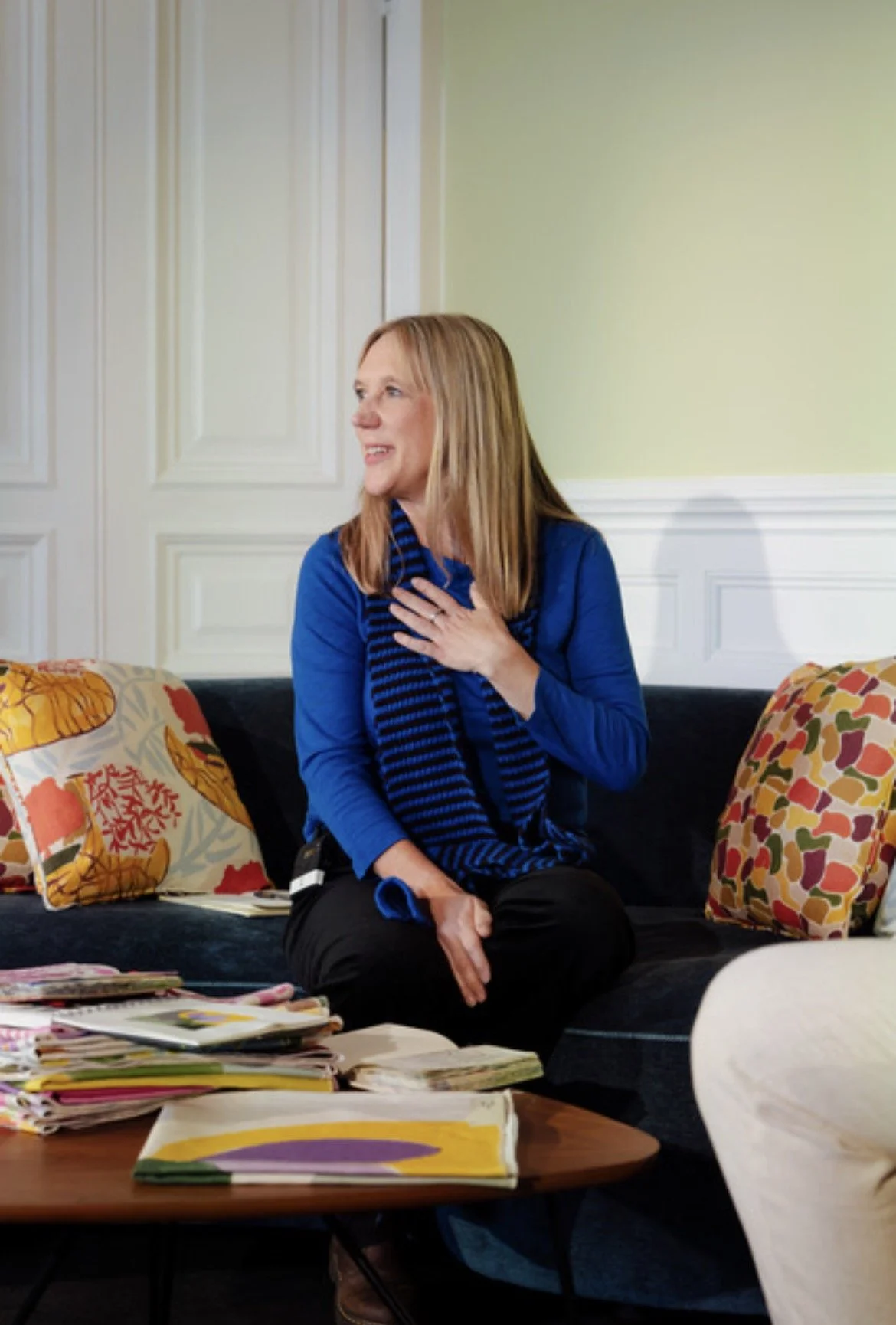
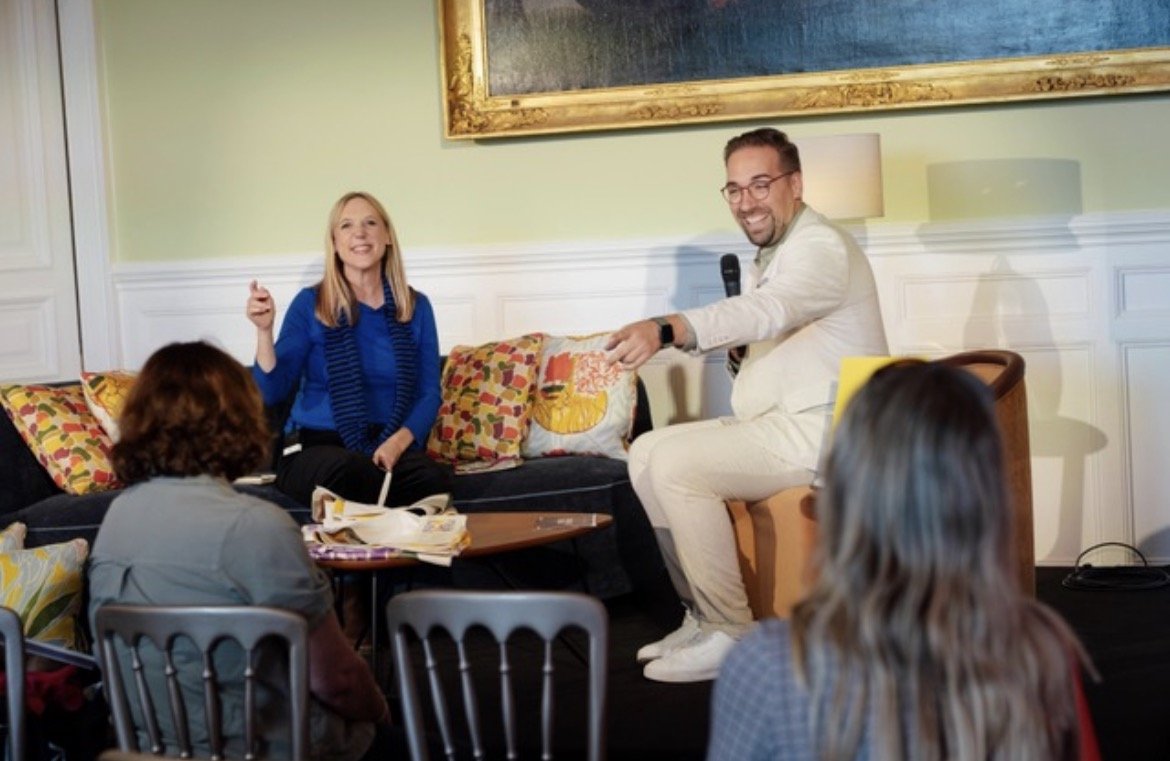
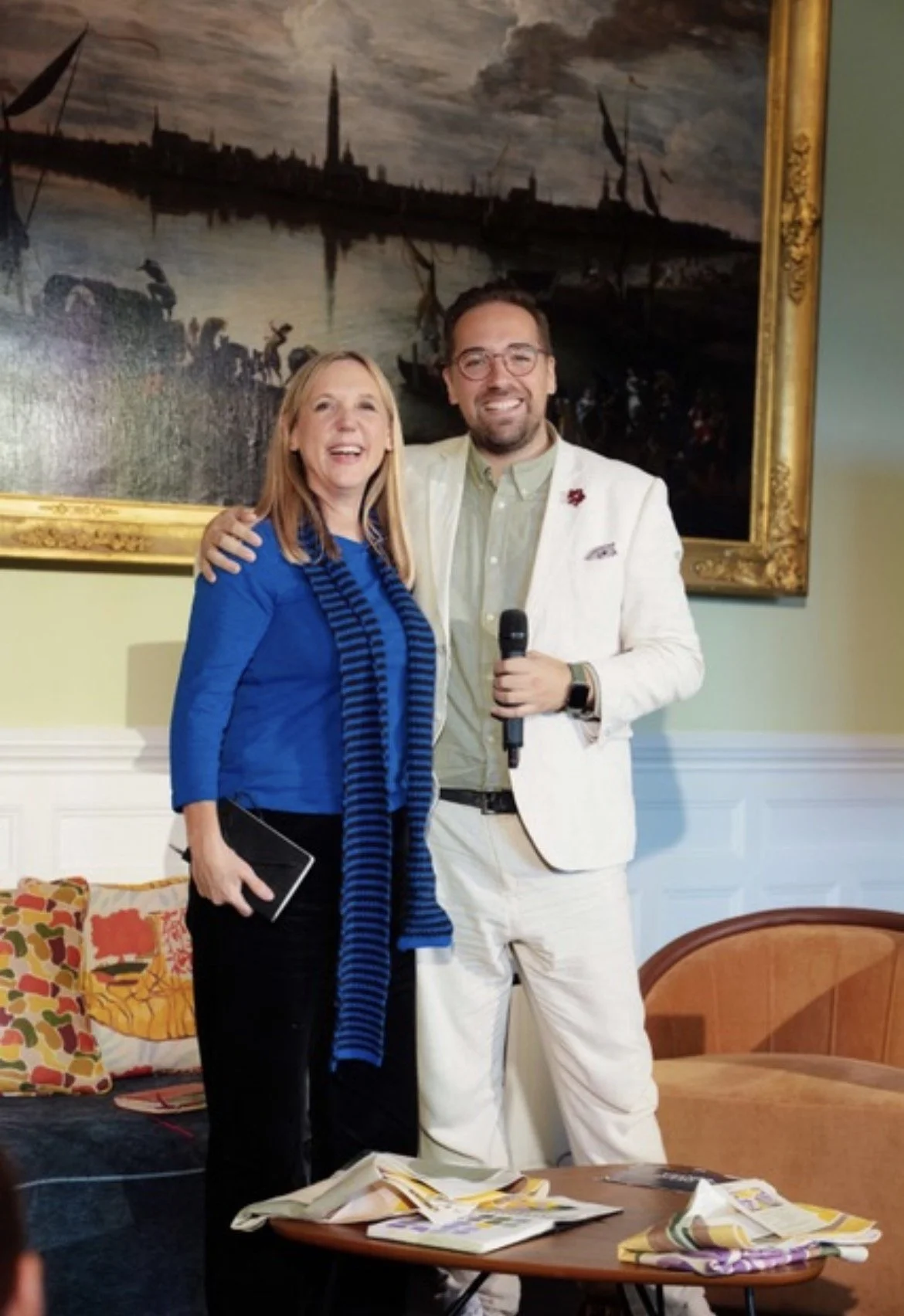
With more than 25 years of experience creating textiles for residential, hospitality and commercial interiors, I have seen the industry evolve enormously.
My work has included fabrics and wallcoverings designed as as ghost designer for leading Interior fabric brands, alongside my own collections designed and manufactured in the UK selling all over the world to architects, interior designers and brands, including Heals, Liberty, John Lewis, Conran and Hilton.
Throughout that time, I have returned to the same fundamental questions.
How do we create spaces that feel meaningful? What makes a colour combination resonate? Why does a particular pattern make us feel something? And how do we preserve the individuality and creative thinking that make design so interesting?
For me, it begins with curiosity.
My daily sketchbook practice has reinforced how important it is to slow down, observe and remain open to what is around us. Drawing simply what is around you, with a creativity that allows for unexpected combination of colours can all become the starting point for something new.
These observations cannot be rushed. They develop through time, attention and experimentation.
As technology continues to transform the design industry, I think it is more important than ever to protect the human qualities behind the work: curiosity, imagination, emotion and the willingness to experiment.
Technology has its place, of course. But we must be careful not to lose sight of the value of the person behind the design, the maker behind the product and the skill involved in bringing an idea into the world.
I am particularly passionate about the relationship between designers and makers.
A successful interior project is rarely the result of one person working in isolation. It comes from collaboration: the designer with an idea, the architect considering the building, the textile specialist developing the material palette, and the skilled craftspeople who turn those ideas into reality.
Choosing the right partners can make all the difference.
When we value these relationships, we create opportunities for knowledge to be shared, skills to develop and genuinely individual work to flourish.
That is something worth protecting.
Bringing it all together
Looking back on Design Central, I came away feeling encouraged by the conversations, the people I met and the enthusiasm for good design and craftsmanship.
Launching British Seasons in this setting brought together so many things that matter to me: colour, pattern, observation, making and the importance of supporting British manufacturing.
After eight years away from creating my own collections, returning with British Seasons has reminded me why I started designing textiles in the first place.
I love the process of looking closely at the world, collecting ideas and turning them into patterns that can become part of someone’s home. But I also care deeply about how those designs are made, the people involved in producing them and the future of the industry I have worked in for so many years.
For me, these things are inseparable.
The future of design should protect craft, colour, curiosity and human connection.
It should also create the conditions for skilled people to do work they are proud of, for businesses to make things well, and for the next generation to see a future in our creative and manufacturing industries.
We all have a part to play in making that happen, through the things we design, the businesses we support and the choices we make as consumers.
Perhaps the question isn’t simply what we want the future of design to look like, but what kind of world we want our design decisions to help create.
That is something I will continue to think about as British Seasons finds its way into the world.
And I hope it is a conversation we can keep having.
Discover British Seasons
British Seasons is a collection of twelve large-scale designs printed on 100% linen in the UK, inspired by the changing colours, shapes and rhythms of the British seasons.
To explore the collection and find out more about my textile and interior design work, visit nminterior.co.uk.
You can also follow my daily sketchbook practice on Instagram at @nminterior.